
✨ Hey there this is a free edition of next play’s newsletter, where we share under-the-radar opportunities to help you figure out what’s next in your journey. Join our private Slack community here and access $1000s of dollars of product discounts here. Here is a seemingly basic question: What allows most modern war technology to work? What allows the drones, the autonomous vehicles, the GPS-guided missiles, the communication systems—and frankly, almost everything useful on a battlefield—to function properly? The answer is the thing that the startup we are spotlighting today, CX2, is focused on: the electromagnetic spectrum. Over the past few decades, billions of dollars have been poured into funding new defense startups and building advanced tech that is useful on the battlefield. This is good. Yet it is also true that almost none of these things work without connectivity. Disrupt that and everything stops working. Which is why electronic warfare has quietly become the most important thing to solve if you want to win. “The electromagnetic spectrum is the base of the 21st century defense tech stack,” Porter Smith, CX2 co-founder and ex-Army commander, said. “If we don’t dominate it, none of the other fancy stuff works.”
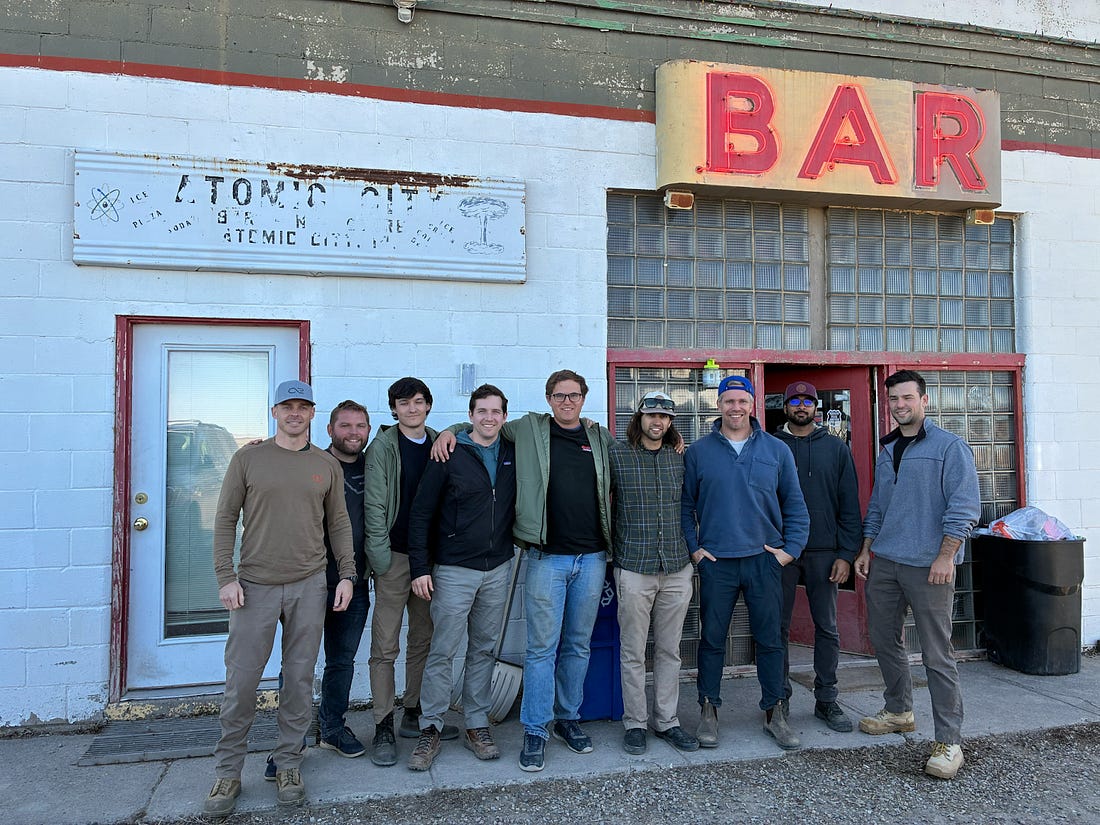
CX2 is building the technology the West needs to dominate that spectrum. And I have a hard time imagining a better founding team for the job:
The strong level of talent and military experience extends beyond the founding team, too: a third of the team at CX2 are veterans. Better yet—if you are someone looking to make a big impact—CX2 is early. They raised a $31M Series A in 2025 led by Point72 ventures (participation from a16z, 8VC, Pax Venture, and others). They are currently hiring for their relatively small team at their El Segundo office; this is a unique opportunity for people, especially engineers, who want to work on hard problems with real stakes. Over the rest of this essay I will share a little more from my conversations with the CX2 team. What is the market here? What are they building? And what would it be like to work there? Invisible warfareIn the summer of 2024, Porter Smith was with troops in Ukraine when he noticed something odd. “Ukrainian infantry guys take spectrum analyzers [devices to analyze the RF spectrum] with them everywhere,” he said. Why were the Ukrainian troops doing this? Because ground forces were dealing with Russian jammers; devices that interfere with the RF spectrum. These jammers “affect your ability to maneuver on the battlefield. Because if you have large jammers, you don’t have GPS-guided munitions, you don’t have the ability to fly your own ISR assets, you don’t have the ability to fly your own logistics efforts.” This obsessive focus on the RF spectrum is not the way war has always worked. “Historically, [what the Ukrainians were doing] is a very niche electronic warfare task in the United States. And their version of 11 Bravos, standard infantry guys, were doing this.” If the RF spectrum is upstream of most modern battlefield leverage, well, it is only natural that your adversary will want to disrupt it. This reality means that winning on the invisible, electronic battlefield is now the key to winning on the physical one. So how would you go about this—practically speaking? CX2 describes their approach simply: “Hunt the archer, not the arrow.” The thesis goes that the best way to dominate the RF spectrum is to identify enemy emitters (like jammers, or drone pilots) and engage them directly. “We think the 21st century kill chain begins in the RF spectrum,” Porter Smith said.
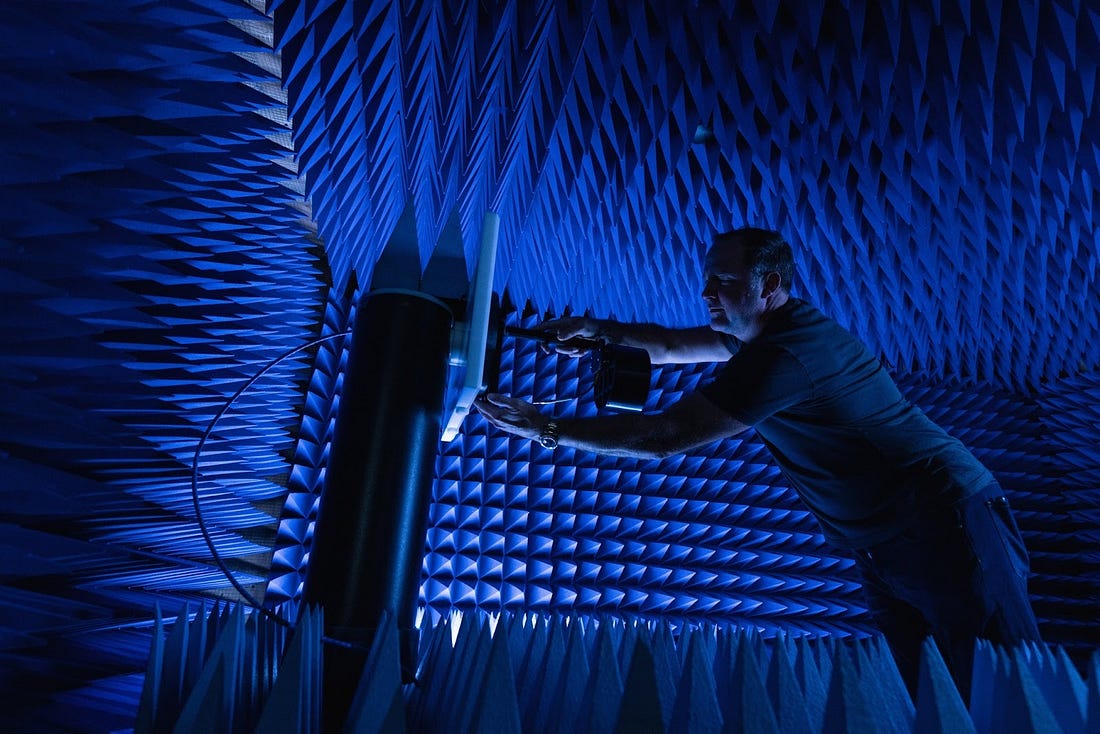
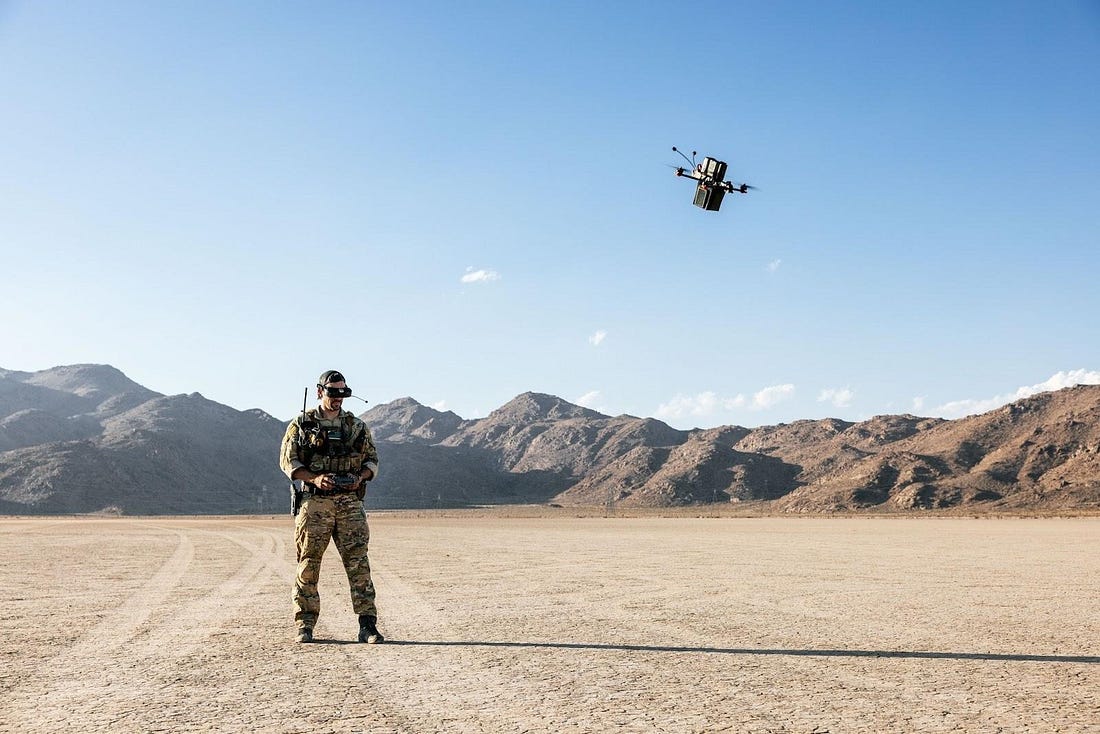
Hunting the archerSo far, CX2 has launched two products: Vadris and Wraith. Both of them identify RF signatures on the battlefield. But they have different purposes. Vadris is a small payload you strap onto an FPV drone that identifies adversary drone operators so you can engage the operator directly—not just their drones. “The counter-UAS market is flooded with drone intercept approaches,” Lee Thompson, co-founder and Head of Engineering, said. “We have flipped that on its head to instead hunt for the drone operator.” Wraith is an autonomous recon drone that creates a heatmap of the RF spectrum and geolocates hostile emitters (like jammers and radars), even in GPS-denied environments. So you can dominate the spectrum even when connectivity is under attack (which is now the norm). If the 21st century kill chain begins in the RF spectrum, as CX2’s Porter Smith believes, then “Wraith is the spark for that kill chain.” These two products are effective expressions of the same idea: start treating the electromagnetic spectrum as the battlefield itself. Because you need to, if you want anything else to work. As you might expect, building these products has required a skilled team with a lot of drive and a lot of experience—you can’t really spend a weekend with ChatGPT vibe coding an instrument of war. (Author’s note: I want to mention that while CX2’s market is currently focused on providing military technology to the West, there are other future applications for this too. Mapping and dominating the RF spectrum is useful if you want to keep drones away from arenas and airports, as one example.)
The team for the jobThe team at CX2 is not your typical team; the environment is not your typical environment. Usually, when you hear about impressive coworkers at your company, you hear people say things like “they were early at Stripe.” At CX2, you may be slightly more likely to hear “they were a commander in the U.S. Army,” or “they built RF systems at SpaceX.” The team at CX2 has a combined experience of more than 22 tours of experience in war zones. They know the mission because they’ve lived it. As for the environment, “if you prefer to stay behind a desk… and you don’t enjoying being outside,” someone said, then you probably wouldn’t fit in at CX2. They test their products frequently in the Mojave Desert, at military bases, and at test ranges. In total, the team was outside testing for at least half of last year. “And 2026 will likely be even more than that,” I was told.
The culture at CX2 is rather intense. The stakes and standards are higher than at the average startup. The problems are more complex. “We have a few core values,” Nathan Mintz (CEO) said. “Show don’t tell; always remember who the end customer is; and to be open and transparent with feedback.” Porter Smith described working at CX2 like driving in Formula 1. “Quick decision-making, rapid prototyping, and swift action are our DNA. An honest mistake caused by a sense of urgency is better than lethargic indecision or action. We prioritize and focus ruthlessly,” he said. I do not get the sense there is much room for bullshit, or for puttering around, at CX2. And my favorite quote about the way they view work is just three words: “Get shit done.” Nathan’s goal as leader is not to burn people out (“we take vacations and believe in weekends,” he said), but the “concept of work/life balance is certainly more biased towards a fast-paced startup environment. [This is not] for someone who is just looking for an 8-5 job.”
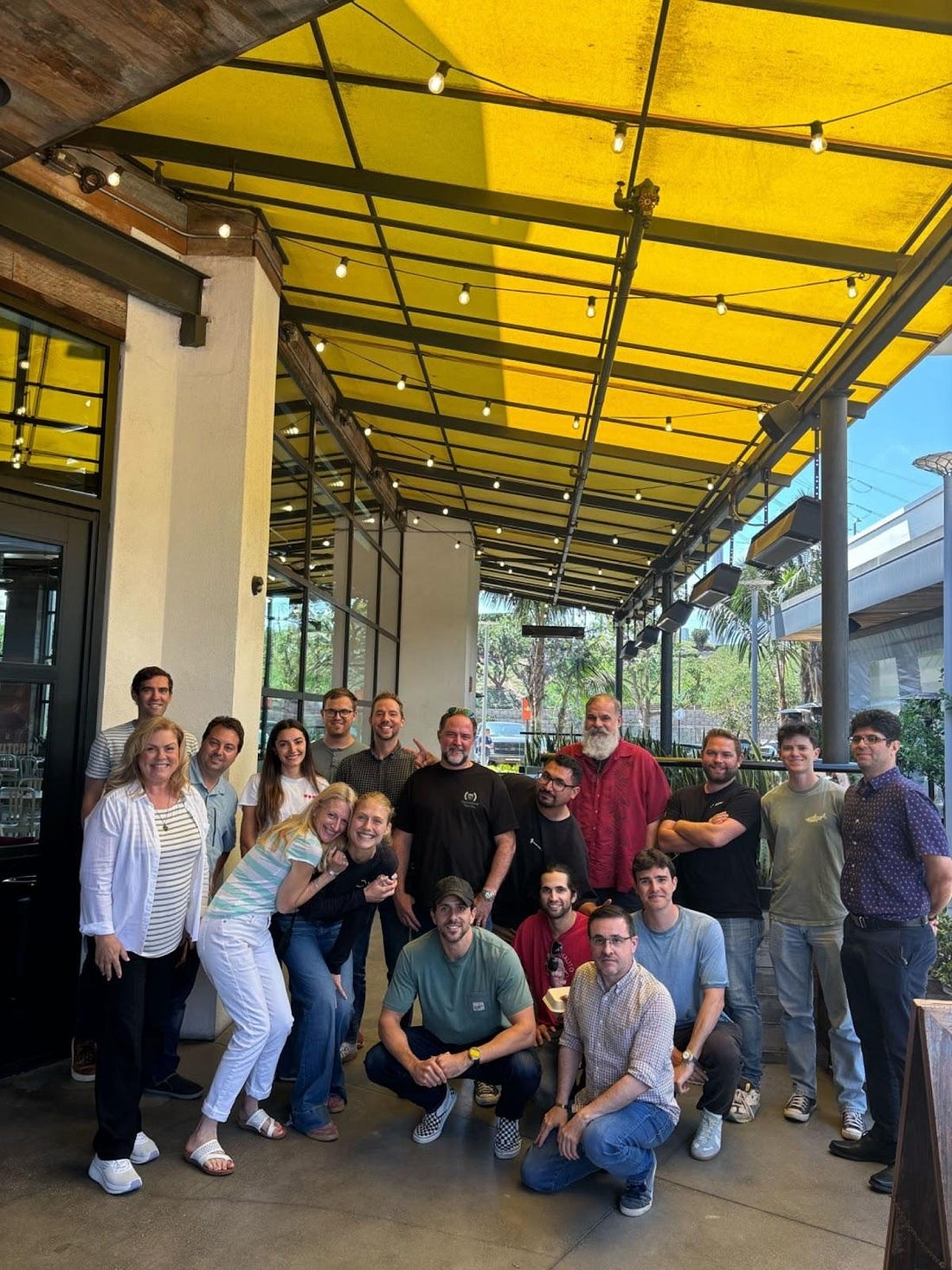
Amid all of this work on what is self-evidently an ambitious and important mission, however, I do get the sense that the team at CX2 is having fun. The company’s office is just a 7-minute drive from the beach, where one employee at the company says he surfs most mornings before work. Responses about favorite stories, moments, and non-work pieces were intriguing:
Should you consider joining CX2? CX2 is not your typical startup, and working at CX2 is not your typical startup job experience. And I think that, for the right person, CX2 could be an excellent fit.
Here is how I might describe the right kind of person:
You could also ask yourself this question, which Nathan Mintz shared with me: “Are you interested in joining a top-shelf team that is reshaping how the West fights electronic warfare? If this sounds like a problem worth working on, and a team worth working with, you can view open roles at CX2 here. The company is hiring at their El Segundo office and, right now, is mostly looking for engineers (both software and hardware). Thanks to CX2 for supporting Next Play and making this spotlight possible. You're currently a free subscriber to next play. For the full experience, upgrade your subscription.
|
Meet the startup redefining how the West fights wars
Thursday, 29 January 2026







Subscribe to:
Post Comments (Atom)


No comments:
Post a Comment