
Inside the early-stage AI video startup with $200M in revenue and a $1.3B valuationHiggsfield AI just finalized a $130M Series A. This is what it’s like to work there.
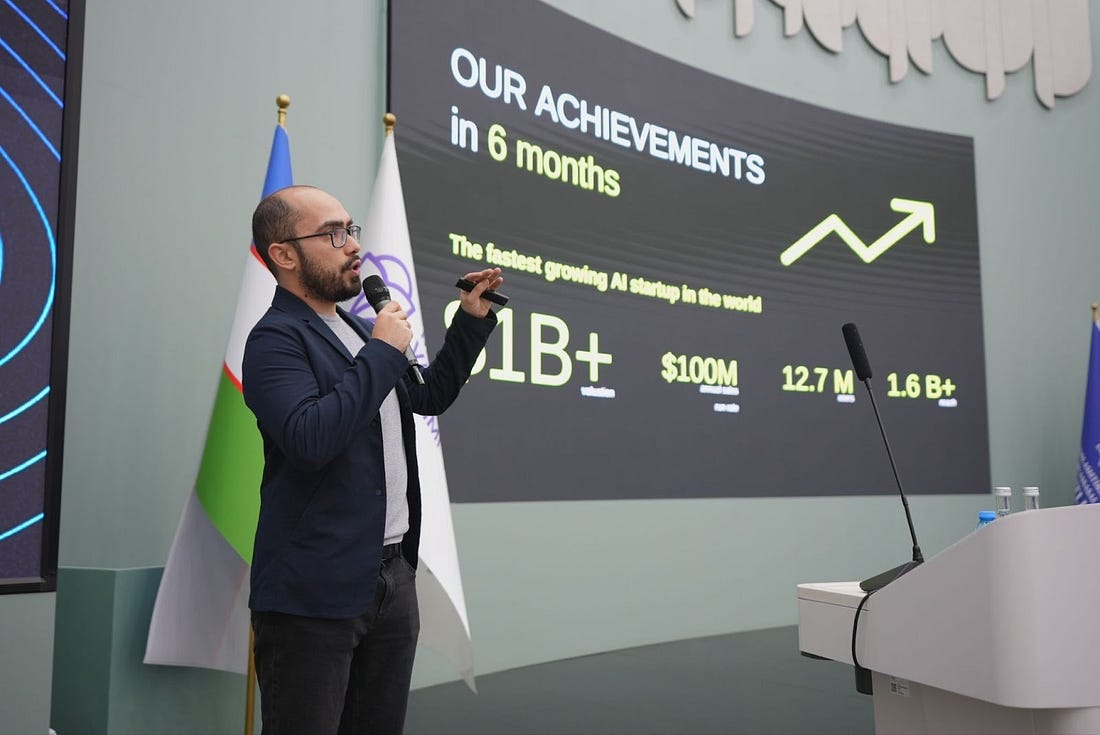
✨ Hey there this is a free edition of next play’s newsletter, where we share under-the-radar opportunities to help you figure out what’s next in your journey. Join our private Slack community here and access $1000s of dollars of product discounts here. 2025 was a strange year for the public perception of AI-generated video. As the technology to produce realistic-looking video on command (e.g. Sora 2 and Nano Banana) became widespread, so did the number of startups aiming to capitalize on this new capability. This was fun at first, but fatigue set in quickly. Really, another AI video generation app/website/product? The word “slop,” now mostly used to refer to meaningless AI-generated content, was Merriam-Webster’s word of the year in 2025. Google Search interest for ‘AI video generator’ peaked in the fall of 2025 but has since begun to wane. Not everyone wants to see another wacky AI video of…Whatever. There is a twist, though, there must be a twist, or we would not be writing this essay. Amidst the graveyard of already-failed and currently-failing and soon-to-fail AI video generation applications there is at least one company that is doing better than ever: Higgsfield. “On fire” would be an understatement to describe Higgsfield’s arc over the past year:
And, in perhaps the biggest news, Higgsfield last week announced their $130M Series A funding round at a $1.3B valuation with participation from Accel, AI Capital Partners (Alpha Intelligence Capital’s US-based fund), and Menlo Ventures and others. Yes, those numbers are correct. For context, Anysphere (Cursor) raised $60M on a $400M valuation for their Series A; Anthropic raised $124M on $461M. Higgsfield’s latest round is much like their growth over the past year—historic.
If you join Higgsfield to work under founders Alex Mashrabov, Yerzat Dulat, Mahi de Silva & co., you are not joining because you think this early-stage startup may one day become a unicorn. It already is. No, you are joining Higgsfield because you believe this story ends with Higgsfield growing to $10B, or $50B, or $100B, or more. You are joining because you believe Higgsfield can become one of the most important tech startups of the 2020s. Whether that will happen is anyone’s guess, but I hope the following piece can explain a little about what Higgsfield is doing, why they are winning, and whether you should join.
Not all AI video is created equalJust five years ago, the idea that you might be able to generate a beautiful video with AI sounded like science fiction. It would have been outlandish to tell a social media marketer that they would be able to create video ads, user-generated content (UGC), and organic content, by typing a prompt into a computer. In 2026, however, this is the reality of video generation. Models like OpenAI’s Sora 2 and Google’s Nano Banana have gone viral; anyone can now generate a video of almost anything. This should be exciting. It felt exciting at first to me, and probably to most people who tried creating their own videos. But as I spent more time with the videos people were creating, doubt crept into the back of my mind. I had one thought: How much of this is actually valuable? A video of flaming giraffes jumping off a train Mission Impossible-style is cool, I guess. But what is the point? Where is the value? What is the market here?If the first step to AI video is simply having the raw energy—the magic—accessible, then the second step is figuring out a way to harness that magic. This is, as I learned quickly when talking to Alex Mashrabov, co-founder and CEO of Higgsfield, exactly what Higgsfield has done. Most of Higgsfield’s run-up to $200M and 15M users thus far has been driven by marketing teams—especially on social media. “In the near future, half of all social media video will be generated with AI, and most of that AI-generated content is going to be created with Higgsfield,” Alex said. Jeff Herbst, an investor, described the social media market as bigger than Hollywood (another potential marker for Higgsfield). To Alex and his team, the timing feels perfect. “First, generative AI has moved from being a research experiment to a practical, mass-market technology,” he said. “Second, the demand side exploded. Social platforms today require constant content. We are not trying to invent artificial demand; the problem already exists at a massive scale. Third, we are in the middle of a very strong global trend. Venture-backed startups succeed when they ride a wave, not when they fight against the current. And small teams [like Higgsfield] suddenly have an unfair advantage [because of] AI-native tools and workflows.” Social media has (primarily) fueled Higgsfield’s ascent, but the potential market is much bigger than that. You could imagine a world where Higgsfield is the default creative tool for anyone who wants to create any video or create any visual effects. This is a market in the hundreds of billions annually, if not bigger.
“In 10 or 20 years, we see a company with billions of users, hundreds of millions of commercial videos, a thriving professional ecosystem, and billion-dollar revenues. A true platform of the industry, setting the standard for the industry,” Alex said. Co-founder Yerzat Dulat is more laconic: “[we are] building the biggest media company ever.” Building the biggest media company everOnly a month after Higgsfield’s public launch, software engineers had a meltdown on Slack. “I think we’re under a massive DDoS attack,” frantic messages read. “Servers are down. Everything is down. Traffic just spiked 20x.” Engineers worked through the night, calling AWS and Cloudflare, attempting to understand what was going on. Could it be real, they wondered? But DevOps experts all had the same opinion: “This cannot be real traffic. Nobody grows this fast.” “And then,” Yerzat said. “Cloudflare confirmed. It wasn’t an attack. It was real people. Millions of real users trying to use our product at the same time.” Thus marked the beginning of an eventful growth trajectory for Higgsfield that has not slowed down since. After launching their generative video tools, Higgsfield has become one of the fastest-growing startups in the world. The platform has attracted the attention of prominent cultural figures, including Madonna, Snoop Dogg, and Will Smith. As videos went viral, users poured in. Topline went up and up and up, and is now at $200M run-rate. How? Well, you don’t need to look further than the team.Alex Mashrabov, CEO, sold his former company AI Factory to Snap for $166M and went on to lead Generative AI at Snap. Yerzat Dulat, CTO, is a top AI researcher and author of popular open-source libraries on GitHub. Mahi de Silva, CSO, has decades of leadership experience (Triller, Amplify, Verisign). He was also a senior engineer at Apple in the late ‘80s and early ‘90s—how often do you hear that? Look down the resumes of anyone else at Higgsfield and your reaction may be similar: impressive.
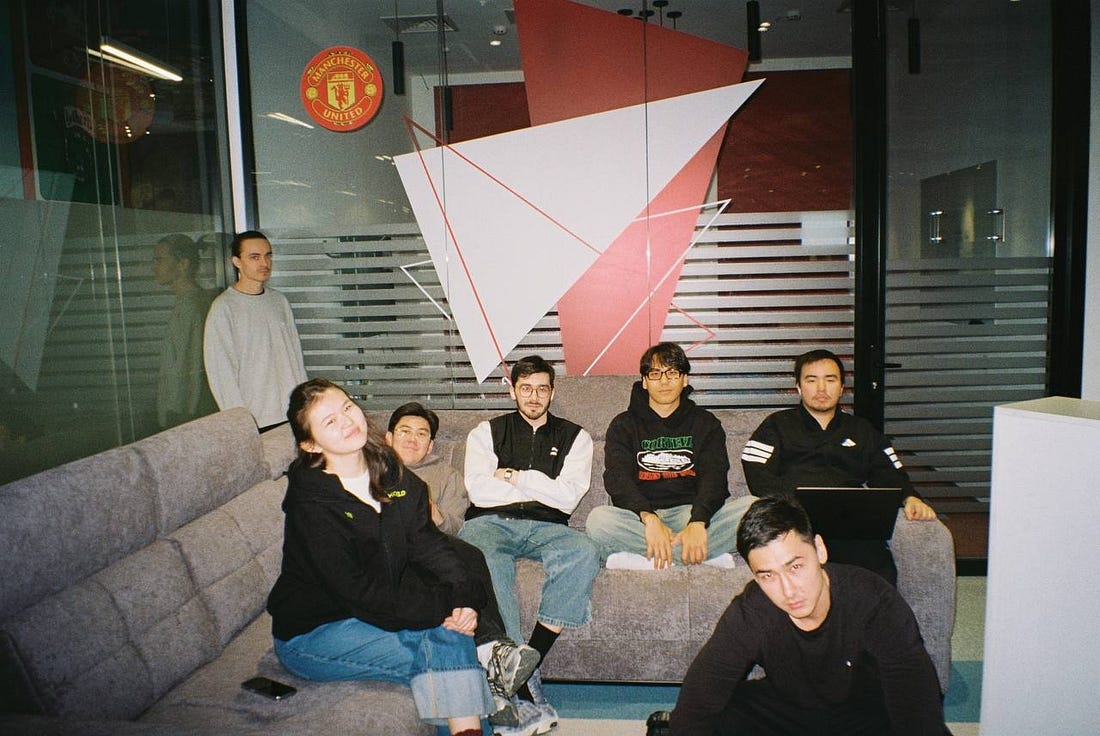
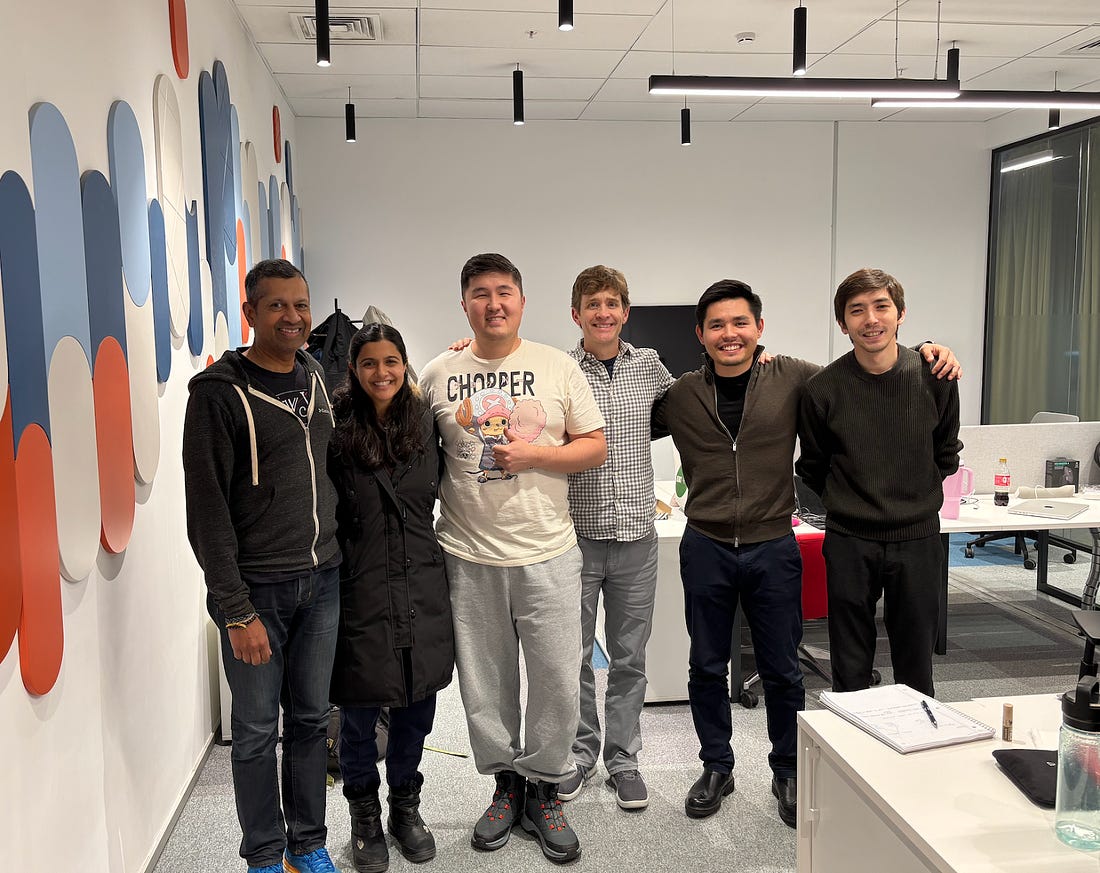
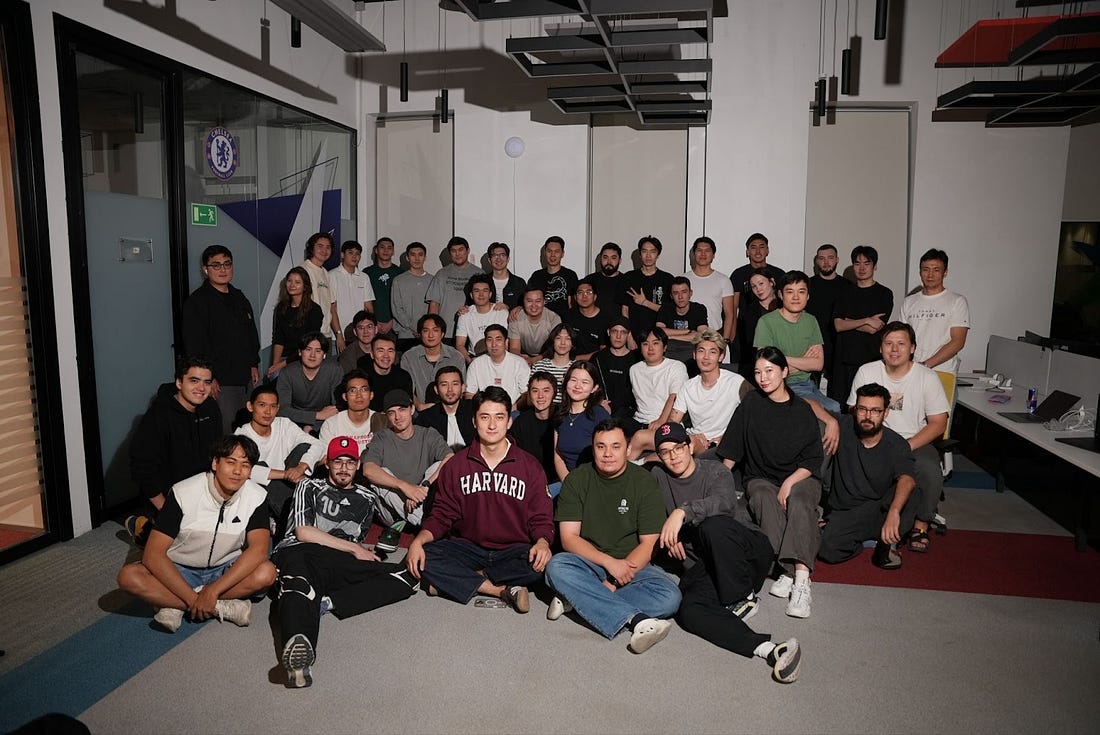
“Honestly, this is the most concentrated pool of top-tier talent I have ever seen in the market,” said Dalida Yerkuliyeva, Higgsfield’s VP of Talent. That is certainly the kind of thing you want to hear from someone like Dalida, who has spent most of her career helping startups hire great people. “[It’s] blitz fast growth - never seen anything like it,” Ruchita Gupta, VP of Finance, said. “PMF, traction, team are all unreal. Once in a lifetime company and opportunity and I am thrilled to be here.” To start, hiring was mostly in-house. “The first 50 people we brought on board were colleagues and experts that Yerzat, Mahi and I knew personally and trusted deeply,” Alex said. Higgsfield’s team has since expanded to well over 100 employees. But, when I talked with the folks about the working culture, it seems like that early founding team environment still lives on today.
How hard can you work?If I asked you to describe the “classic startup work experience,” you might describe a few things:
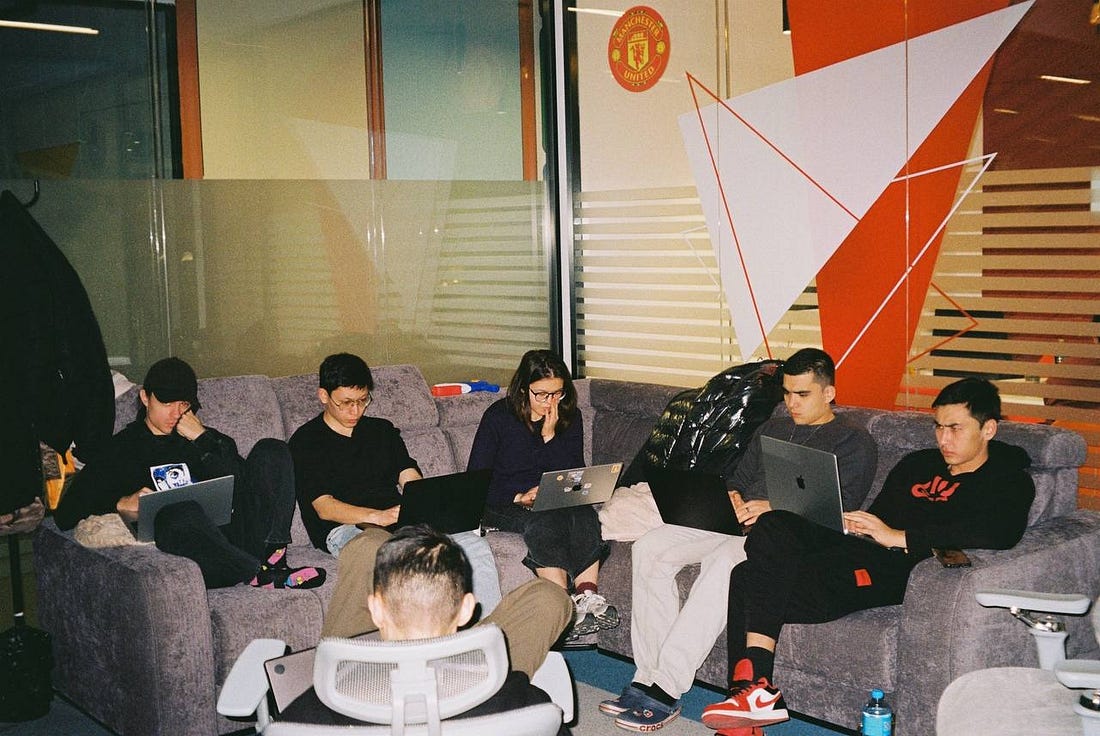
Higgsfield doesn’t work in a garage, but the rest of it is basically accurate.
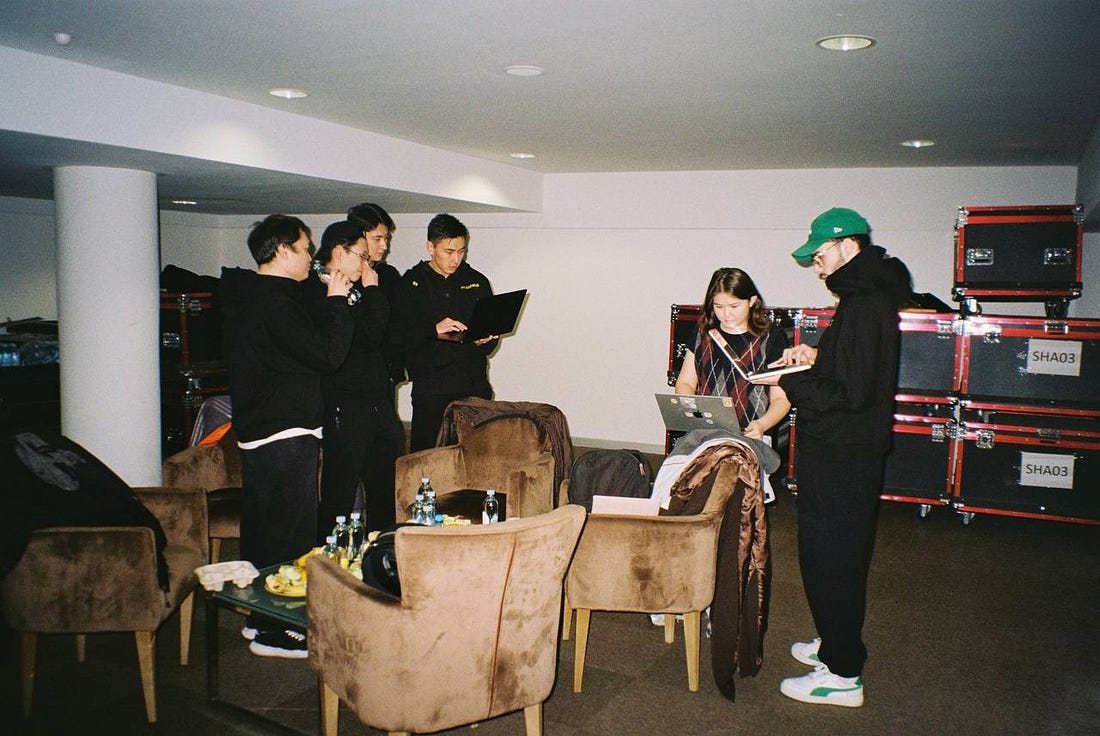
When new people join, Dalida told me, “you can see the hesitation in their eyes. These are talented people who [are giving up] a lot: comfort, family time. But the moment they see the team in action, working together, everything changes. You can feel the energy, the ambition… and it’s so contagious.” “I think many outsiders assume that once a startup reaches our size, it becomes more corporate and comfortable,” Alex said. “In our case, it’s the opposite: we scaled the team, but we kept the founder mentality. At most startups the extreme ‘grinder mode’ usually only applies to the very first people - the founding team. We are no longer a tiny startup, and yet we still operate with that same mindset.” Kamazhay Kospan, the marketing lead at Higgsfield, told me that although the work is intense, “it is hard to find the right word for [the founders’] remarkable trust in us. They really let us own our work and learn along the way. I’ve always thought: wow, Yerzat, Alex, & Mahi really believe in us and listen to us.”
“Even when I give 200%,” she said, “I feel I can still do more. I don’t get burned out.” Expectations are high, and they are consistent. “Yesterday’s success is just yesterday’s success. You can be extremely smart and skilled, but if you don’t keep delivering every single day, it’s easy to feel out of sync,” Dalida said. “[The intensity at Higgsfield] isn’t for everyone.” So who’s a good fit? “Someone who doesn’t sit and wait for instructions,” Kamazhay said. “People who catch questions that are floating in the air, and who don’t believe that something is impossible. You need to be the type who dives in, figures things out, and trusts your ability to solve problems.” If you “don’t need to wait for things to be fully defined before acting,” Jasmyn Jarnigan, VP of B2B Strategic Parternships, said, “and enjoy operating at the intersection of creative intuition and technical systems,” then you might be a good fit. “Also, it’s very flat,” Ruchita Gupta said. “If you want a fancy title or to avoid doing ‘analyst’ tasks, then this is definitely not the place for you.” Everyone is expected to do real work. It helps to contextualize this within the reality that Higgsfield is one of the fastest-growing startups on the planet. The people who work there are talented and smart and believe they are building a generational company; they have already reached some historic milestones. If you are this kind of person, and perhaps you are, why wouldn’t you want to work as hard as possible? Should you consider applying to Higgsfield?
There is one expected path for startups at Higgsfield’s stage: a modest $20M Series A, a few million dollars in ARR, and a few hard years of work to hopefully one day reach unicorn status and beyond. This approach sometimes works. Loom, for example—a name that most people in tech know and respect—peaked when it raised a Series C at $1.5B; this was viewed as a huge win. With Higgsfield I think you have something of a different path. Something closer to a Cursor or an Anthropic or a Perplexity. You have an insanely fast-growing company that is raising way more money than companies usually raise; that is valued far higher than most companies at their stage are; that, if successful, could be one of the most valuable companies of its generation. The other reason you join, I think, is because you crave something that few startups today can provide: an equally exhausting and exhilarating startup experience alongside a lot of talented people. You want to work a 10-12-hour day when necessary. You want to be up late at night, solving problems in front of a whiteboard. You want to become better at your craft. And you want to be early at a company which could, if it completes its ambitious and admittedly difficult mission, become one of the most successful startups of the century. As for how to apply? You can look for careers at Higgsfield here; the company is based in the San Francisco bay area and they’re hiring for both remote and in-person roles. I asked Alex how he feels about cold emails; he’s open to them, though prefers thoughtful LinkedIn messages. (People often reach out with ideas that Higgsfield is already trying, he said, but you are welcome to reach out. Cold outreach is one of the best ways for candidates to get across Alex’s desk.) You may expect a quick interview process (Dalida said it took “less than 10 days from my first interview to receiving an offer”) and onboarding is “extremely short. You don’t wait to learn everything first.” If Higgsfield sounds like the kind of place for you, well, I’d encourage you to apply and/or reach out. Thanks to Higgsfield for supporting Next Play and making this Spotlight possible. You're currently a free subscriber to next play. For the full experience, upgrade your subscription.
|
Inside the early-stage AI video startup with $200M in revenue and a $1.3B valuation
Thursday, 22 January 2026





Subscribe to:
Post Comments (Atom)


No comments:
Post a Comment