
A smaller empire: America’s search for its ‘Oceania’America is adapting to a world where it cannot reliably set rules everywhere at once, so it is narrowing priorities and concentrating leverage where it can still shape outcomes, especially in Europe.
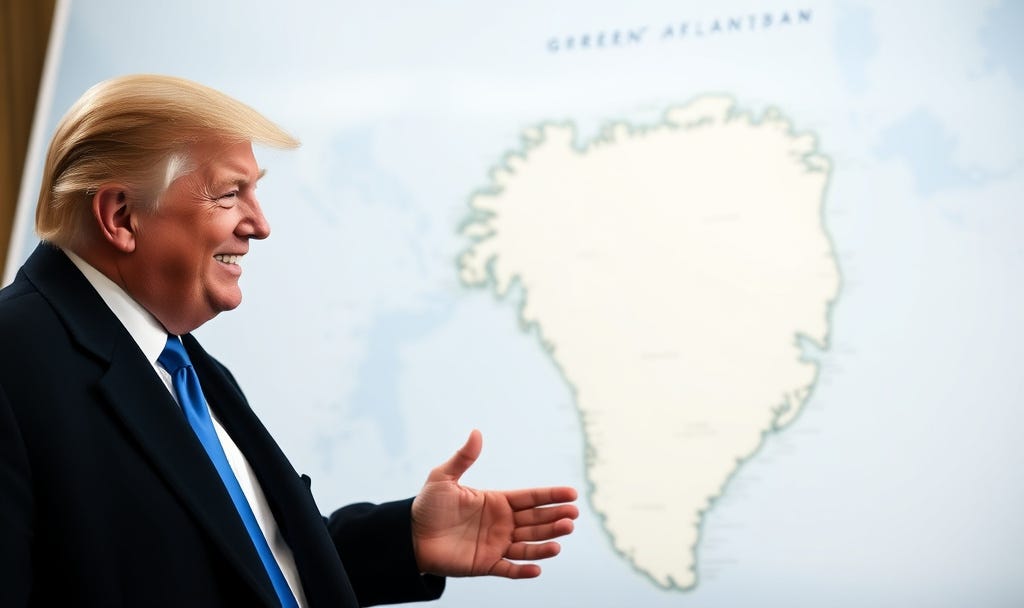
This emerging posture resembles a search for an “Oceania”: not global dominance, but a defensible, resource-secure core anchored by aligned institutions and manageable commitments. A smaller empire logicThe core claim is that Washington is moving from universal ambition to selective consolidation, driven by finite resources and louder domestic demands. In this reading, “running the world” becomes less about directing every region and more about preventing strategic shocks that would ricochet back into US politics and the economy. Europe stands out because it can provide strategic depth, industrial capacity, and legitimacy if it remains cohesive. The “Oceania” project in EuropeThe “Oceania” idea implies stitching together a consolidated European bloc that is secure enough to function as a stabilising hinterland, yet dependent enough to remain aligned. The ambiguity is that US influence can simultaneously strengthen Europe’s perimeter and limit Europe’s autonomy, especially if crisis management (such as over Ukraine) is effectively channelled through Washington rather than resolved independently by Europeans. The result is a Europe that spends more, coordinates more, and discusses sovereignty more, while still operating within constraints imposed by transatlantic leverage. Limits of leverage: Greenland and beyondEven when the US expands access to strategic geography and resources (Greenland is a symbolic example in this narrative), “access” does not automatically equal uncontested control. Tactical wins agreements, basing opportunities, and preferential supply arrangements can look decisive in headlines while remaining reversible or politically fragile over time. This is why the pattern of bold announcements followed by mixed follow-through becomes a feature of the strategy, not a bug: it buys time but rarely resolves contradictions. Competitors and the Western Hemisphere constraintA calm Russian and Chinese assessment, as framed here, treats US swings between ambition and constraint as predictable and exploitable: wait out the rhetoric, then act where feasibility gaps appear. In Latin America, a Monroe Doctrine revival encounters the hard problem that pressure cannot easily substitute for investment, trade, and infrastructure, where partners may see more tangible gains from China. That combination renders the Western Hemisphere a stress test: if Washington cannot consistently align security demands with economic incentives, alignment will be partial and transactional. Implications for leadersFor business and policy leaders, the practical signal is that the US–Europe recalibration continues, with recurring policy volatility rather than a single stable “new normal.” Expect pressure and opportunity across four lanes: energy security choices, defence-industrial scaling, regulatory alignment (and occasional divergence), and supply-chain resilience planning. Strategy tends to work best when it assumes churn: diversify partnerships, price geopolitical risk explicitly, and keep operational options open for both deeper cooperation and sudden friction in transatlantic ties. Final thought: this framework argues that force and leverage can address discrete problems and delay outcomes, but they seldom produce durable settlements when underlying economics, demographics, and national interests pull in different directions. In that sense, “Oceania” is less a triumphant new empire than a defensive adaptation to a multipolar era. You're currently a free subscriber to The INFORMER. For the full experience, upgrade your subscription.
|
A smaller empire: America’s search for its ‘Oceania’
Thursday, 29 January 2026





Subscribe to:
Post Comments (Atom)


No comments:
Post a Comment