
Hey, Luca here, welcome to a weekly edition of the💡 Monday Ideas 💡 from Refactoring! To access all our articles, library, and community, subscribe to the full version: Resources: 🏛️ Library • 💬 Community • 🎙️ Podcast • 📣 Advertise
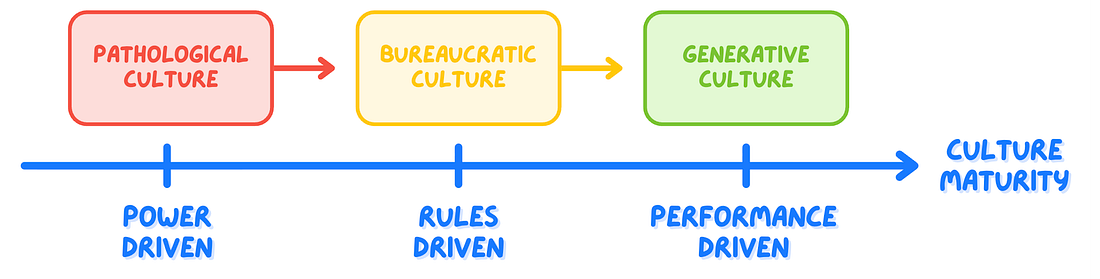
1) 🪴 Generative culture in practiceOne of the most powerful ideas about company culture is generative culture, about which we wrote a primer last year.
It’s hard to summarize what generative culture is about, but if you ask me, it’s about three main themes: how information flows, how decisions are made, and how failure is handled: 1️⃣ Information flows freelyIn generative cultures, information is shared, not hoarded. This means:
A strong litmus test is incident handling. The best teams communicate transparently, focus on resolution over blame, and follow up with post-mortems. This creates a virtuous cycle where people feel safe to share problems early and contribute learnings back to the org. 2️⃣ Decisions are made at the right levelGenerative cultures aren’t simply bottom-up — they optimize for making decisions at the most appropriate level:
The goal is to make teams move fast, but within clear boundaries. Teams should make good local decisions that align with the bigger picture. 3️⃣ Failure is learningGenerative cultures handle failure distinctively. Instead of looking for someone to blame, they focus on:
When people feel psychologically safe, they treat failures as experiments — data points that improve the system. Engineers become more willing to take calculated risks, surface problems early, and discuss them openly. You can find our full guide below 👇  2) 📊 Intentionally allocating engineering time is a winEarly this year we released a deep industry report on traits and practices that make teams successful. One of the biggest wins that we found is intentionally allocating engineering time across different swimlanes of work (e.g. maintenance vs improvements vs new features). Teams that have fixed allocations on some of these (e.g. typically maintenance), display:
This is something we often discussed on the newsletter and we were already big fans of, but we were surprised by how strong the correlation is. You can find the full report below! 3) 🎙️ The Creator CEOEarlier this year I interviewed Dan Shipper, the CEO and founder of Every, one of the world’s most popular publications about AI and our relationship with technology. To me, Dan is the perfect example of The Creator CEO — a founder / executive who blends strategic work with content creation, and has found a way to balance the two things.
This has shaped how Dan structures his workday:
Dan believes many creators burn out because they follow traditional business advice that pulls them away from their core creative work. Instead, he suggests a different model:
This approach challenges the startup playbook where founders typically step away from doing the core work as the company grows. Dan, instead, sticks to that because it’s what he loves. He said that admitting that he wanted to spend half his day writing was initially embarrassing, but ultimately made him a better CEO by forcing him to build systems and empower his team. Here is the full interview with Dan: 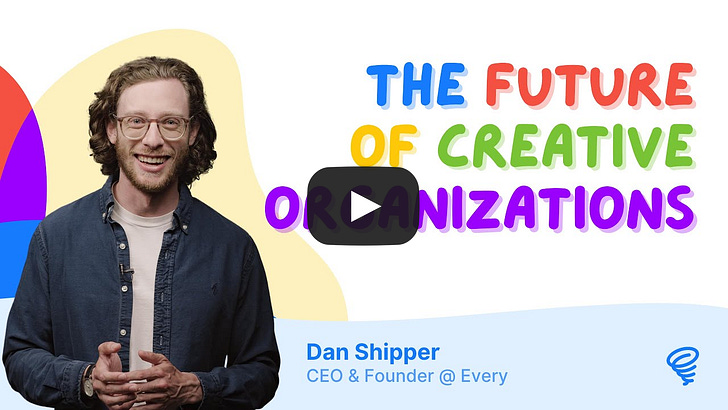 You can also find it on 🎧 Spotify and 📬 Substack And that’s it for today! If you are finding this newsletter valuable, consider doing any of these: 1) 🔒 Subscribe to the full version — if you aren’t already, consider becoming a paid subscriber. 1700+ engineers and managers have joined already! Learn more about the benefits of the paid plan here. 2) 📣 Advertise with us — we are always looking for great products that we can recommend to our readers. If you are interested in reaching an audience of tech executives, decision-makers, and engineers, you may want to advertise with us 👇 If you have any comments or feedback, just respond to this email! I wish you a great week! ☀️ Luca
|
Generative culture, engineering allocation, and creator CEOs 💡
Monday, 17 November 2025





Subscribe to:
Post Comments (Atom)


No comments:
Post a Comment