
How a hot AI startup got 800+ business customers by following their curiosityWhat is it like to work at Pylon?
✨ Hey there this is a free edition of next play’s newsletter, where we share under-the-radar opportunities to help you figure out what’s next in your journey. Join our private Slack community here and access $1000s of dollars of product discounts here. I would like to believe that we all start out as very curious kids. Full of creative ideas and big imaginations. But as you get older, it seems as if you often start to lose that spark. That curious calling. You slowly start becoming comfortable with your little corner of the world, and stop asking questions or pursuing your random ideas. You stick to what you know, because what you know is often more predictable (and feels safer!). This evolution is common but not necessarily effective for people. In fact, it often can be very limiting. Particularly when they are in a place of looking for a new job or thinking about starting a company. It can be helpful to embrace what’s next with an open mind, and work backwards from what is actually best for you at the time, as opposed to constraining yourself to what you know. This same philosophy also applies to organizations. You often see startups, as they become older and accumulate more resources, become less curious. They stop asking questions of themselves and their customers, and start sticking to what they (think they) know. This can work well in more mature businesses. But in the technology industry, especially when things are moving quickly, closed-mindedness can really cause you to miss out on big opportunities. It can also ruin your culture, as the status quo and internal politics get in the way of getting things done. So one thing I look for—in both the people and startups that I meet—is how open-minded they seem. How much do they embrace curiosity? How imaginative are they? How stuck in their ways are they? How much do they focus on the status quo as opposed to working backwards from first principles? That’s what really stood out in meeting the team at Pylon. They seemed like really uniquely curious and open-minded people. And they seemed to have built a culture that enabled that curiosity, and curious people more generally, to thrive (as opposed to what we often see: slow-moving stagnation). How have they done this?Maybe because curiosity has been the core of the company since the very beginning. The founders had known each other for a while (Advith and Robert met at Caltech and then later met Marty during the Kleiner Perkins Fellowship). They were software engineers at companies like Airbnb, Samsara, and Affinity. They followed their curiosity, after they all noticed a similar trend at their companies (chat-based platforms like Slack and Microsoft Teams were replacing email in B2B comms, and in turn, breaking conventional post-sales comms workflows). Rather than carry on, they paused and asked themselves: what should come next? This insight, while subtle, eventually led to the founding of Pylon, which is now a full-featured AI-powered support platform built specifically for B2B companies. And they’ve been growing quickly:
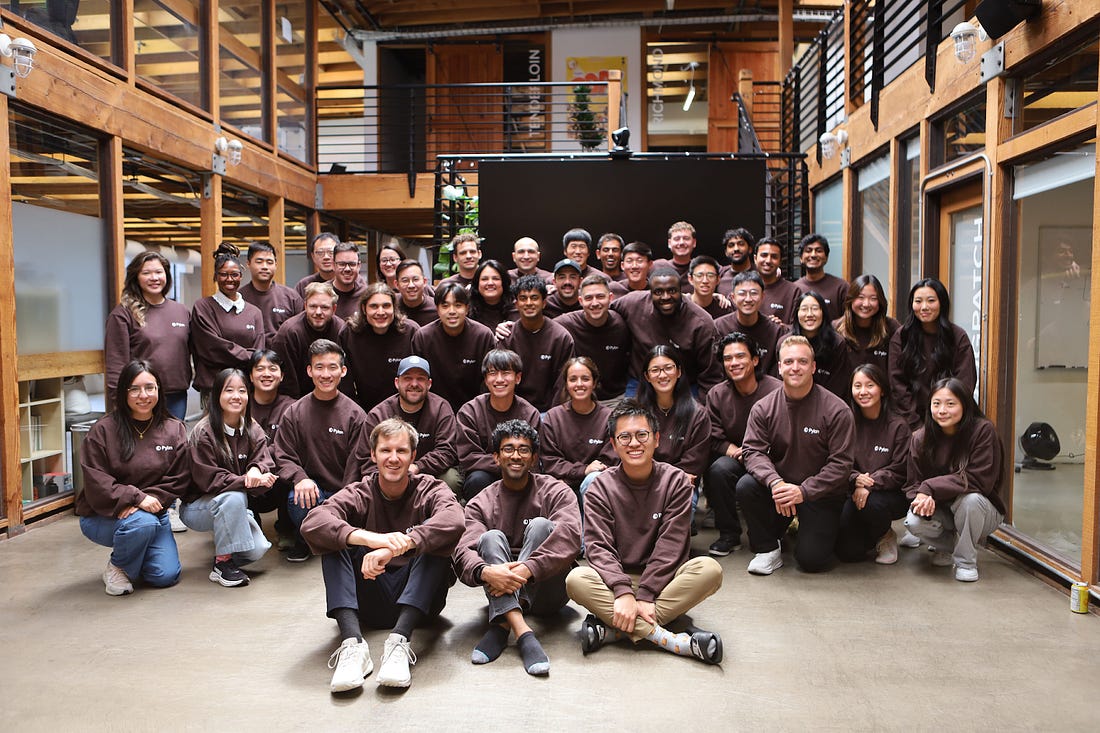
So how have they managed to maintain a culture that encourages curiosity and creativity? What are people on the team like? What’s it like to work at the company? All that and more in this Next Play Spotlight.
Major thanks to the Pylon team for sharing behind-the-scenes details and supporting Next Play. Pylon is the type of company that has a very large product roadmap. They operate in a really big space with lots of customers hungry for better software, and so there’s a ton of stuff that they could build that would add tremendous value. But in order to figure out precisely what to build, and in what order and in what way, they have a lot of decisions to make. Lots of in the weeds decisions that require understanding complicated systems. So really the only way for them to scale quickly while expanding their product offering is to hire people they can trust that will take ownership of their area. And to do that, they’ve needed to build a culture that really fosters the ownership mentality.
You sometimes meet companies that say they want to hire people who “think like owners” or “operate with a founder mentality,” but once you peek under the curtain you see a bunch of red flags: like hearing stories of how people very quickly shoot down new ideas or how processes keep getting in the way of creativity. It’s very hard to act like a true owner when you are constantly being blocked, and it’s even worse when those blockers are coming from internal stakeholders. The culture of Pylon seems to orient in the other direction—people feel very free to experiment with whatever they think will get results, to at least learn and gain conviction as they make decisions. This is a big part of instilling the ownership mindset, as they give people freedom to make decisions. For example, they have a culture that empowers people to own their area and experiment with solutions that’ll help drive results. And it’s for this reason: it is one thing to philosophize around what you think is best. And that can sometimes be useful. But oftentimes, ideas need to be tested out in the real world. With real customers. With real, unbiased feedback. You can let the results do the talking once you launch. Before then, it’s all just hypothetical. And so at Pylon, they encourage people to launch fast.
People often get in their own way trying to get everything perfect upfront. That’ll often slow you and the entire team down. It’s also just an impossible expectation for people to meet. It can be more effective to just ship the product, gather learnings, and iterate from there. That’s part of how the team at Pylon pushes the pace of progress.
They want people with a bias towards action. Not just people who can talk loudly around their ideas. But people who can actually walk the walk.
People at the company seem to rally around this very “risk-on” / experimental mindset; they are not afraid to run tests and encourage one another to pursue their ideas. Even if ideas seem to be more on the creative side.
These experiments of course do not always work out. People on the team know that. What matters most is how you respond to them. Do you hide from results? Or do you look at them honestly and maximize your learnings?
People at Pylon do the opposite of hide; they very much encourage people to dig into details and ask lots of questions. They really want people to follow their curiosities and get to the root level of understanding of things.
This includes the founder/CEO Marty, who spends a lot of time in the weeds understanding details and asking questions.
Following your curiosity as you pick up on the details is a big part of this process, and applies to everything from asking questions about customers to dogfooding the product and using it yourself.
This helps people from across the company build a really deep intuition for the product and for the customer, which is an essential input into building something great.
And, if you can harness that product sense and blend that with your internal intuition, there’s a ton of opportunity to make an impact. They are at that very unique and exciting hypergrowth startup stage. The business seems to be really growing.
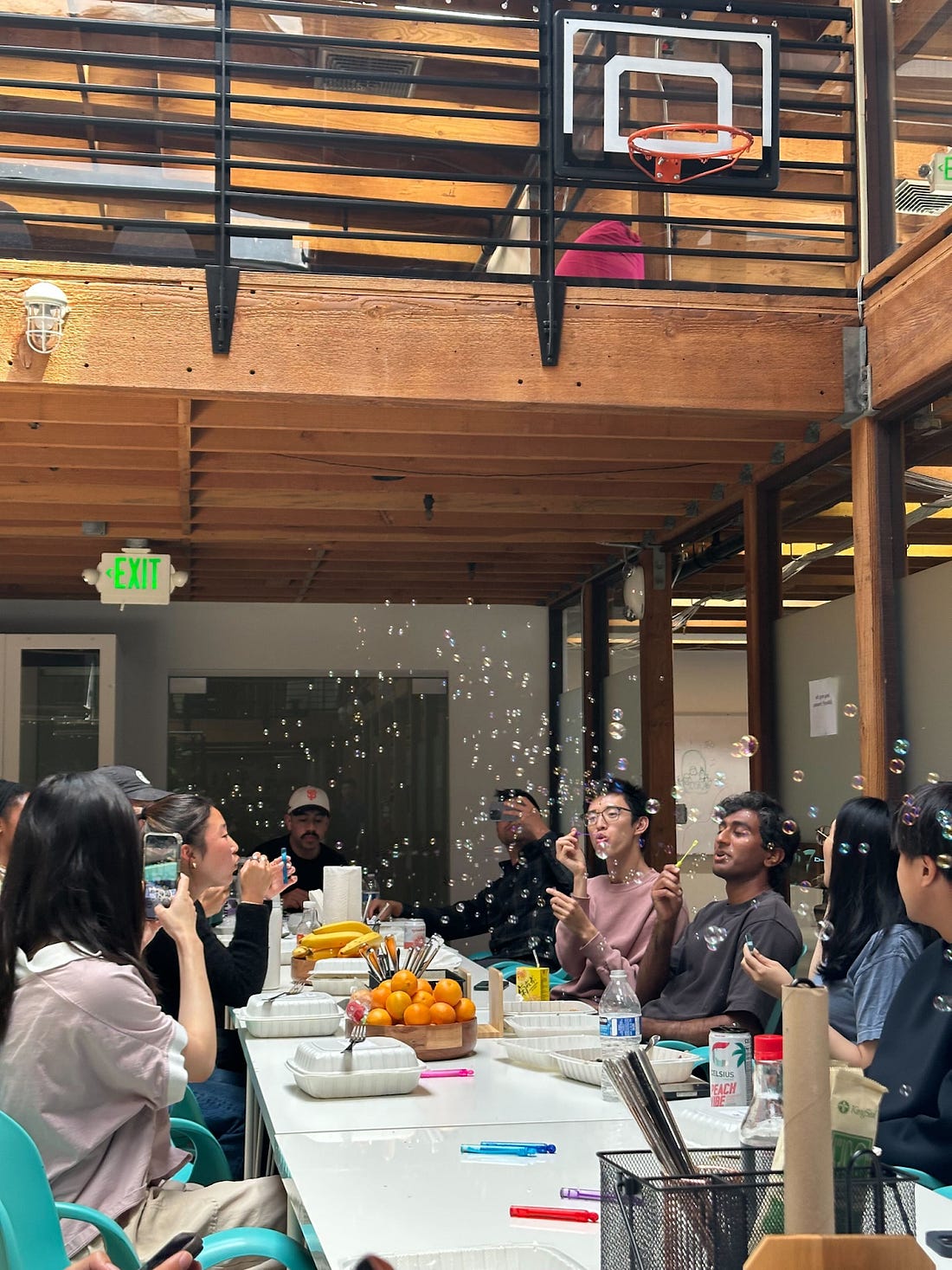
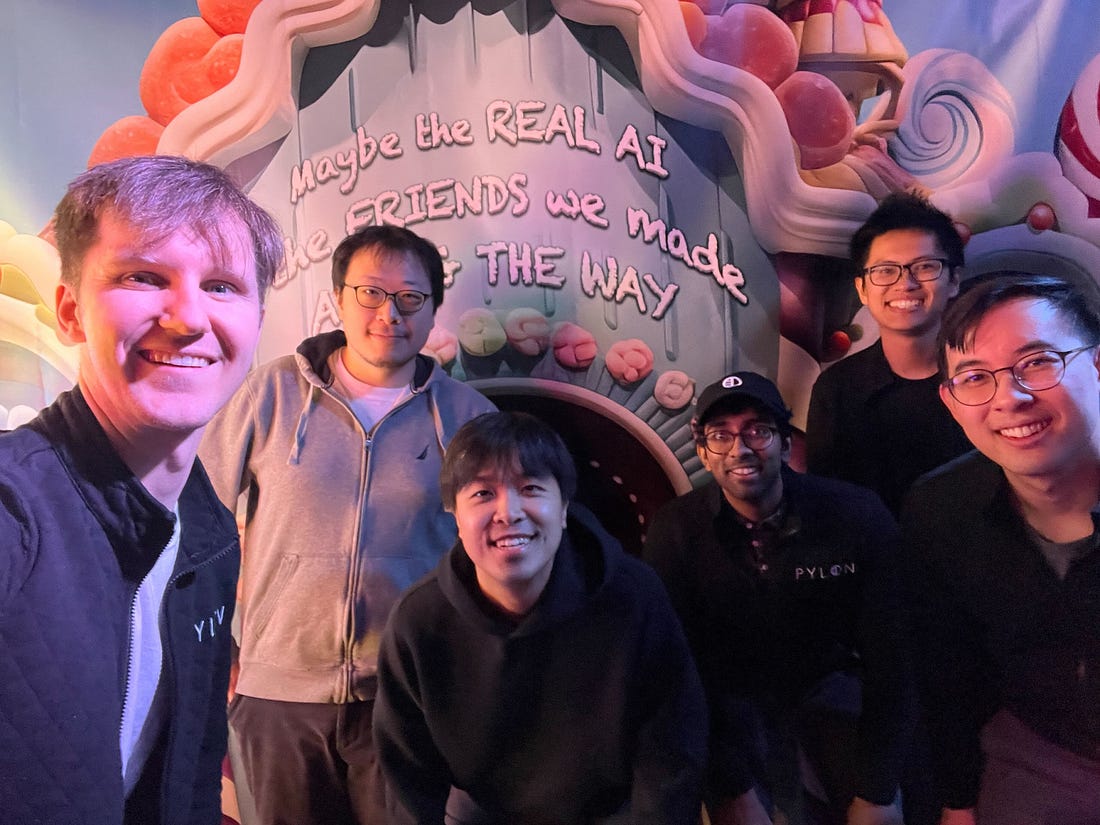
Importantly, people seem to be having fun along the way.
To be clear, fun does not mean the job is easy or very straightforward. There’s a lot of hard work to be done. They call it “happy grinding.”
They are the type of people who have FUN taking on complicated problems and working hard. And they are looking for more people who resonate with that philosophy.
They aren’t going to hold your hand telling you what to do. There’s not really time for that.
They aren’t going to put you in 100 meetings where you have to answer to some bureaucratic processes.
Instead, they’ll give you space so you can do your best work. So you can do you, follow your curiosities, and make a big impact.
You can make an impact on the product and customers.
And you can also very quickly make an impact on the culture.
If that all sounds interesting to you, Pylon is hiring for 24 roles in SF across engineering, GTM, product, and support. And if you are looking for more opportunities, be sure to check out Next Play. You're currently a free subscriber to next play. For the full experience, upgrade your subscription.
|
How a hot AI startup got 800+ business customers by following their curiosity
Thursday, 2 October 2025




Subscribe to:
Post Comments (Atom)


No comments:
Post a Comment