
How a 13 person startup scaled to millions in ARRBehind-the-scenes with Credal and their AI platform
✨ Hey there this is a free edition of next play’s newsletter, where we share under-the-radar opportunities to help you figure out what’s next in your journey. Join our private Slack community here and access $1000s of dollars of product discounts here. Here is a five-minute exercise I recommend everyone try right now: pull up your calendar and, in looking back at the past week, try to estimate what percentage of your work day went towards activities you found useful (i.e. they drove progress in some way) and compare that with what seemed like a waste of time. What is your proportion? The sad reality these days is that so many companies, even small ones, are bogged down by bureaucracy. Unnecessary structure and ineffective processes that burn everyone’s time. You have probably been there—sitting in a “planning meeting” that drones on and on with no useful conclusions. Bloat is ineffective. Working at an organization that moves slowly, that gets distracted by internal politics, and that’s often blocked by internal egos…it’s not productive or fun for anyone. Those are the types of companies you generally want to avoid. I think for a lot of people, the best thing you can do for your job search is try to find a team that’s really motivated to achieve a great outcome. Not chasing an internal status game. But rather a focused effort to deliver something truly great…like a great product for customers or return for investors and employees. That’s why I suggest that when you are looking at companies, try and figure out how they make decisions. Ask them how they decided their product roadmap. Or how they decided to hire for X role. Do they seem to justify priorities based on outcomes, or some other fuzzy variable? It should be pretty revealing. The “outcome orientation” is what immediately stood out in talking to the team at Credal. Their entire ethos is centered around designing the company to achieve an extraordinary outcome. Outcomes are the oxygen of their culture. Ravin Thambapillai, their co-founder/CEO, put it plainly: “Creating an extraordinary company is about two things: 1) hiring people with extraordinary potential, and 2) creating an environment for those people to do extraordinary things.” The results have been exciting so far:
And so we thought it’d be interesting to dive a bit deeper with the Credal team to understand what it’s like to work at the company? What’s the culture like? Who are they looking for? All that and more in this Next Play Spotlight.
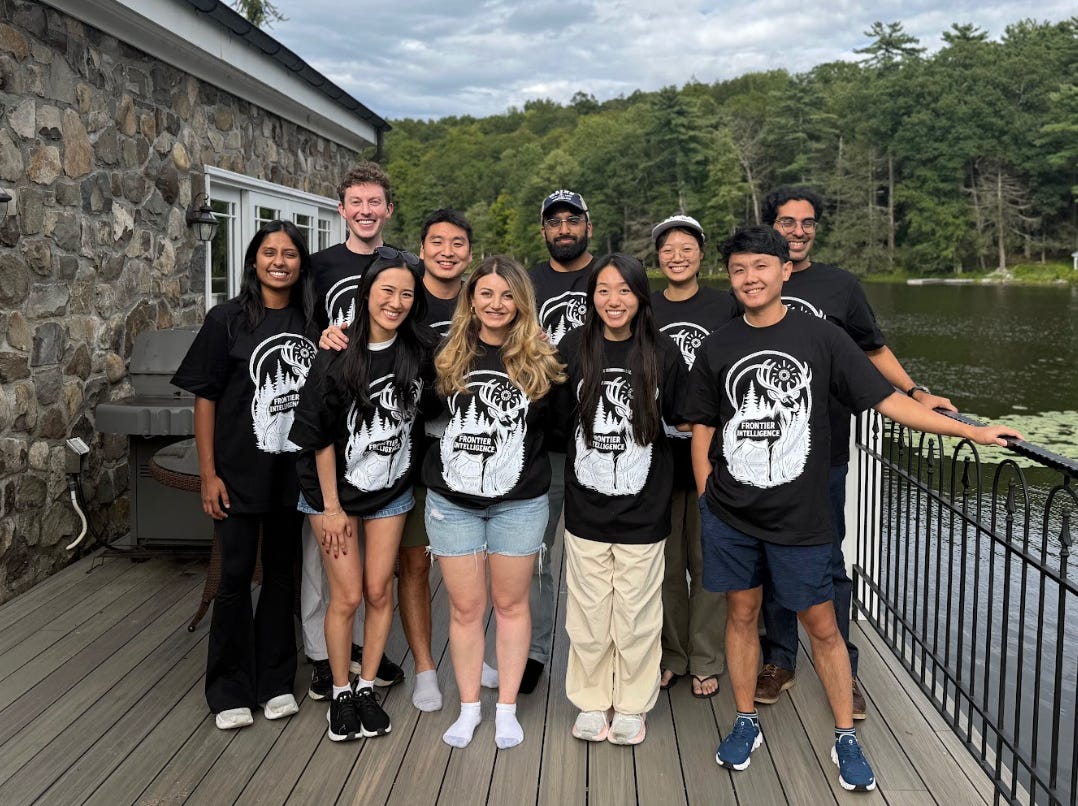
Major thanks to the Credal team for sharing behind-the-scenes details and supporting Next Play. The founders of Credal—Ravin and Jack—both previously spent several years at Palantir (a now $400 billion+ public company). They were responsible for shipping Palantir’s first cash-generative project in life sciences, and helped accelerate COVID clinical trials in the process. They’ve seen what an organization operating at a high-level looks like, and have attempted to recreate the magic. But perhaps not in the way you think.
Ravin explains his philosophy: “”If you want to build the next Palantir or Stripe, you have to hire from Palantir or Stripe.” I hear this all the time from founders who take pride in hiring exclusively from elite engineering cultures. I used to fall into this trap too. The logic is seductive, but if you actually think about the facts of how these great companies approached hiring in their early days, it’s actually quite counterintuitive. How many of the early Palantir employees had 4+ years of experience at prestigious tech companies of the time? Virtually none. Almost every single one was from no-name startups, direct out of school, unknown boring companies, or the military or intel community. What I’ve learned from hiring at Credal.ai is that what actually makes a person extraordinary is a heavy dose of hunger, ambition, and the relentless ability to question conventional wisdom. And more often than not, that’s found in those with extraordinary potential, but are still unproven.” As you can tell, Ravin and the team are much less focused on credentials and much more focused on your ability to actually get things done.
So many startups get sucked into “best practices” they read about on Twitter.
Credal stands out because they very much focus on independent thinking as opposed to blindly following the status quo. They encourage everyone on the team to question…everything:
It’s this “working backwards from an outcome” orientation that unites the team. Outcomes are at the start of most all decisions at the company. Like for example with hiring, as we just explained, and also with how they choose what technology/infrastructure to build. You commonly see companies brag about having deployed the latest and greatest AI models. Sometimes you wish someone could be in the room to ask a simple question: “Why?” Why is this important? Why is this the right decision? What does it have to do with the outcomes?
Outcome-orientation also applies to the structure and processes that support the organization. While they are growing quickly, they are still very much an early stage startup. They keep things generally lightweight, lean, and focused.
Part of making progress towards outcomes involves figuring out what the right near, medium, and long-term outcomes should actually be. At a startup that has lots going on, it’ll be obvious that there are things you could do but it’s not always obvious what the *right* thing to work on is. It’s really valuable to spend time on the high leverage work as opposed to the long tail of things that do not really make a difference. Sometimes CEOs take it upon themselves to try and optimally decide how every person at the company should be spending every minute of the day. (This is not Ravin’s approach: “From a personal perspective, I think he does a great job of helping but not too much to the point of hindering growth: it’s very much “I know you can figure it out” but with emotional support. I feel like empathy is definitely his superpower.”) Micro-micro-micro management is rarely optimal because the CEO rarely has all the information needed to make great decisions at every level. Especially for short and medium term activities, it’s often most effective to delegate that responsibility to the people closest to the work.
This is how they’ve been able to ship complicated solutions on tight timelines with high standards:
A big step in being trusted to set your own goals is ensuring you’re aiming high enough. At Credal, you are very much responsible for setting sufficiently ambitious goals.
And if you own a goal, you are given the freedom you need to figure out how to achieve it. It’s a balancing act of figuring out how to focus your plan.
As an aside, they also have a practice of everyone setting personal growth goals for themselves. Activities that’ll support their learning and advancement.
They then encourage transparency, having people share their work plans, personal growth plans, and also review the state of the business. Everyone is aware of what’s going on, and why particular areas are being prioritized.
And, as part of that transparency, they encourage feedback. They see collaboration as a big part of being able to obtain great results.
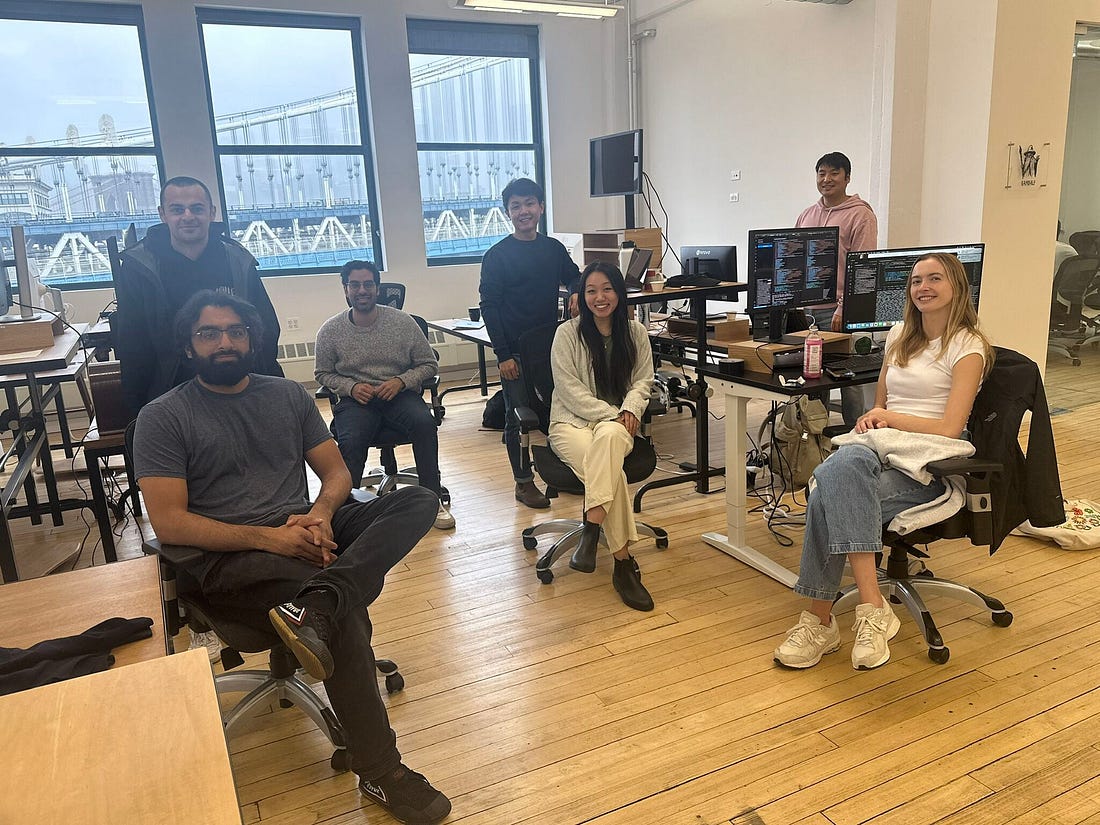
While they are well on their way, the Credal team has an ambitious set of outcomes they hope to achieve in the coming year and beyond. They are looking for people who want to “work hand in hand with global enterprise customers working on some of the most important problems in the world, there is no better place suited for you than Credal.” They are hiring for many roles in NYC including a forward deployed engineer, a go-to-market deployment strategist, and software engineers). And if you are looking for more opportunities, be sure to check out Next Play. You're currently a free subscriber to next play. For the full experience, upgrade your subscription.
|
How a 13 person startup scaled to millions in ARR
Sunday, 12 October 2025





Subscribe to:
Post Comments (Atom)


No comments:
Post a Comment