
This is Brad DeLong's Grasping Reality—my attempt to make myself, and all of you out there in SubStackLand, smarter by writing where I have Value Above Replacement and shutting up where I do not… White Flags & Price Tags: Moving Toward a Domesticated Fed in a World of Political Costs of Moderate InflationThe voters hate price increases while the economy hates slumps. The Fed blinks under pressure from Trump…
The voters hate price increases while the economy hates slumps. The Fed blinks under pressure from Trump…
We have:
The inflation point that Joe makes is very apposite. This is an important failure mode for a democratic-capitalist economy. Inflation is prices rising everywhere. It feels like official incompetence or corruption. Even only moderate inflation reallocates wealth to the unworthy, as debtors gain, creditors lose, and firms with momentary pricing power aggressively skim rents. Fixed‑income households lose. All this is and is seen as deeply unfair. Thus voters read inflation as the government breaking the macroeconomic political contract it offered in return for its election. And so people do, genuinely, hate inflation—or at least think they hate inflation. You play by the rules—work, save, inherit—and expect stable money. When prices jump, the contract is breached. Plus history definitely shows that voters read inflation as élite failure: Weimar’s delegitimization; the 1970s oil shocks and wage–price spiral; the Volcker cure via engineered slack. Moderate inflation destroys bonds of polirico-economic societal trust at a very rapid rate. High inflation is worse. Keynes put it best this way in 1919:
And yet inflation—modeate inflation at least—is very close to zero-sum, while recession is clearly lose lose. As Keynes also said five years later:
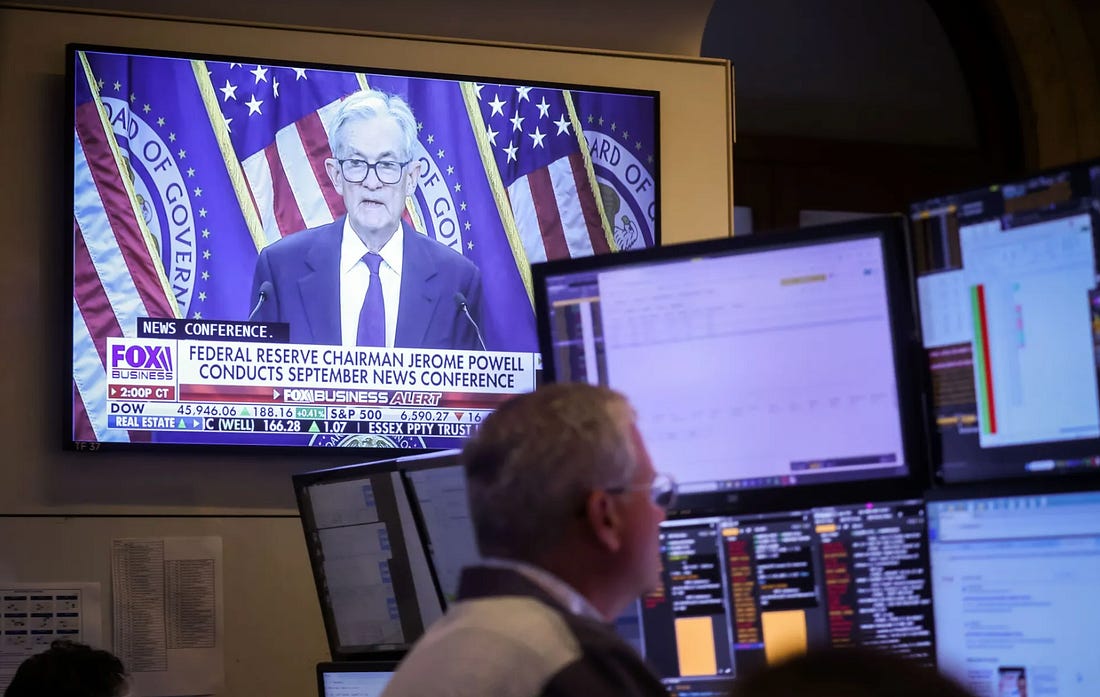
It is clear, as Keynes said, that recessions are worse, at least from an economist’s point of view. Wealth destruction is bad in a way that semi-random wealth rearrangement is not. Recessions. destroy output by idling workers and capital. Yet voters, as we have just seen, punish inflation more. In part this is because of the distribution of losses. Only those rendered unemployed—especially those long‑term—feel recession hit them hard. Others may fear joining the unemployed, but meanwhile their life of getting and spending goes on more-or-less as before. If there is a shift in their experience, it is that they have extra power to pick up bargains! Everyone annoyed becaue the government has broken its contract and they cannot buy on the market what their wealth entitled them to deserve—that is the perceived harm from inflation, and everyone hates it, immediately. The actual loss of wealth in the present from idled factories and unemployed workers is, in some sense, less important: it does not affect us, and, anyway, they probably deserved it—lazy bastards. Also invisible—the longer-run damage from recession: Stalled investment, quiet scarring. Separation erodes skills. Careers step down the job ladder. Graduating in slumps scars earnings. Communities suffer hysteresis as plants shut and capital leaves. Inflation mostly redistributes. Deep recessions destroy real wealth. History shows distinct asymmetries: the Great Depression; the eurozone’s austerity decade; the U.S. GFC’s slow labor recovery versus 2020–22’s fast rebound. As a result, politicians and central bankers who do a good job of managing risks from the standpoint of maximizing society’s wealth are likely to be penalized by the voters. While politicians who do a bad, excessively “austere” job by reducing risks of inflation to zero are likely to skate by, at least until snake-eyes come up and they trigger not a normal recession but a true depression. And so there is an unhealthy bias from the voters pushing policy toward “austere” performative toughness. But austerians trade substantial risks of the cold of moderate inflation for a much smaller risk of an economic Bubonic Plague. The interwar gold‑standard orthodoxy certainly protected against inflation. But it did so by enforcing deflation, greatly deepening if not causing the Great Depression, and breaking democracy. Europeans in the 1980s failed to recognize that their sclerotic labor markets required a kinder, gentler disinflation than the one inflicted by Volcker on the other side of the Atlantic, and they lost a decade of economic growth. The post-2008 eurozone repeated the error: price purity, premature consolidation, and mass unemployment. The U.S. barely skated by in 2009–13, and a recovery incomplete even as of 2016 fueled the rise of Donald Trump. Thus in 2020–22 the United States, wisely, chose an “insurance‑heavy” policy to reduce the risks of severe depression, accepted the risk of higher inflation, roleld double-sixes and got the inflation, but also get the fastest and most complete jobs recovery plus a von Hayekian market-wisdom wheeling of the structure of the economy into a near-optimal configuration. Good policy ex ante. Risk management says accept some inflation volatility and risk as a way of avoiding the possibility of catastrophic output losses. Was it good policy ex post? It was good economic policy: that is a hill I will still die on. The Biden team did, from the economic perspective of risk-adjusted output-maximizing decision-making under uncertainty, a near-perfect short-run job of balancing risks. But, politically, Kamala Harris and the Democratic congressional caucus were very heavily punished for it. To change the topic: I think this Fed meeting does mark the end of effective Fed independence. The Fed, collectively, lowered its estimate of where unemployment is likely to be in a year and raised its estimate of where inflation is likely to be. And the Fed also, unanimously, decided the appropriate reaction to this shift in their expectations is to lean into the wind and lower interest rates. This is an asymmetric response that reads less like data‑dependent optimization and more like political accommodation, the quiet end of the old norm of “independence within government” that bound the Fed to lean against the wind even when it was unpopular. Joe Weisenthal rightly calls this configuration “weird”. But it is more. Arthur Burns’s 1972–73 acquiescence to electoral pressure is the textbook case of captured policy that bought short‑run job gains at the cost of a deeper inflation problem. This looks to me like a smaller version of a similar moment: raising a white flag to try to keep the executive off the Fed’s back in the hope that confidence in the inflation-target anchor can be restored in the future. One might want to say the rate‑cutting cycle was intentionally paused in late 2024 to preserve the option to appease an incoming White House in late 2025 without actually caving on policy—that making cuts now under Trump pressure rather than having made them in the spring when Trump was not watching is no biggie. Perhaps. But I do view this with great alarm. And this is the me who still sees a low r*, and whose unwillingness to call for substantial policy easing now rests on chaos-monkey tariff risks still out there in the future. If reading this gets you Value Above Replacement, then become a free subscriber to this newsletter. And forward it! And if your VAR from this newsletter is in the three digits or more each year, please become a paid subscriber! I am trying to make you readers—and myself—smarter. Please tell me if I succeed, or how I fail…#white-flags-price-tags-moving-toward-a-domesticated-fed-in-a-world-of-political-costs-of-moderate-inflationPlease forward the email & otherwise share it to everyone you think would appreciate it…
|
White Flags & Price Tags: Moving Toward a Domesticated Fed in a World of Political Costs of Moderate Inflation
Thursday, 18 September 2025






Subscribe to:
Post Comments (Atom)


No comments:
Post a Comment