
Reviewing the most useful AI tools for your careerThe 5 AI tools that could actually help you right now
✨ Hey there this is a free edition of next play’s newsletter, where we share under-the-radar opportunities to help you figure out what’s next in your journey. Join our private Slack community here and access $1000s of dollars of product discounts here. When you are thinking about what’s next (like joining a new company or starting your own or even leveling up at your current job), it may be smart to pay attention to trends in the industry. What are the hot markets? What are the most interesting opportunities? That is why this week, we spoke with Tyler Folkman — with the aim to help you learn about tools that can help you (actually!) be more productive. By the way, if you’re looking for interesting startups to join, here are some recent lists of opportunities we’ve made: Reviewing the most useful AI toolsI've spent hundreds of hours testing AI tools over the last few months. Most are expensive distractions. GitHub Copilot? Waste of money for me. Those GPT wrappers charging $20/month for a basic prompt? Even worse. But here's what I learned: The best tools aren't trying to be magic. They're building systems that integrate AI better than you ever could on your own. I watched a colleague completely transform their career trajectory this year. Not because of a specific tool. Because they were curious enough to fail, learn, and push themselves. They got a 20% raise just by being willing to experiment with AI while everyone else was scared. That's the real secret. It's not about the tools. It's about the mindset. But the right tools help. Here are the 5 that actually matter. Tool #1: Perplexity Pro (The Research System That Actually Works)
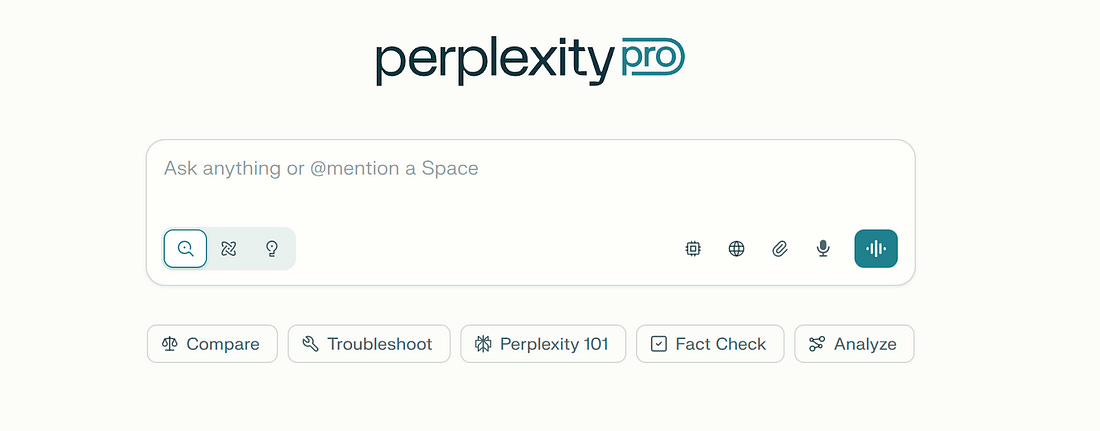
What everyone gets wrong: Using it like Google. That's missing the entire point. What actually works: Perplexity is about getting cited, up-to-date research in minutes instead of hours. I use this constantly for my side projects. The difference isn't speed. It's trust. Every claim has a source. Every fact has a citation. When you're trying to understand a new market or technology, that matters. Last week I needed to understand a competitor's strategy. Perplexity found their posts, patent filings, and employee updates. Connected dots I never would have found manually. The workflow that actually saves time:
Why this beats everything else:
Time saved: 5-8 hours per week on research Cost: $20/month Reality check: Sometimes misses very recent news (last 24 hours). Always verify time-sensitive stuff. If you want to go deeper, check out their getting started page. Tool #2: Rezi (The Resume Tool That Gets You Past The Robots)
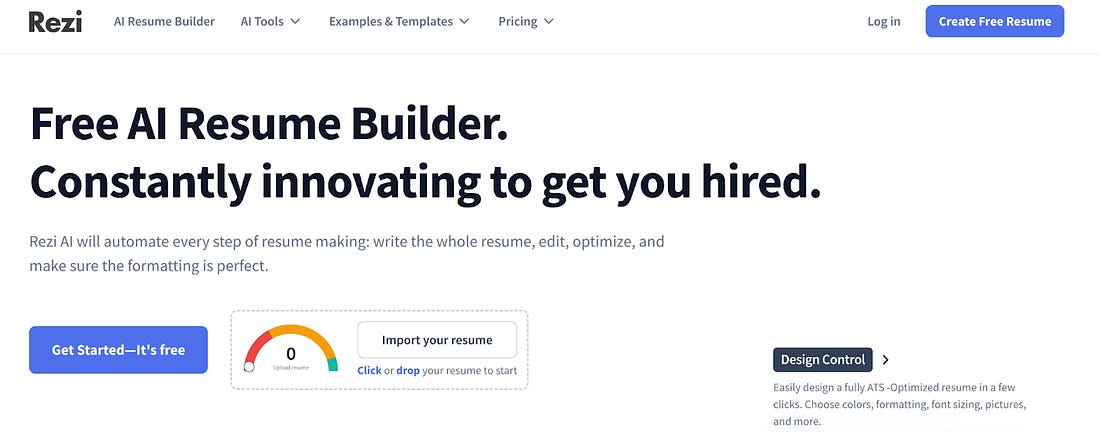
What everyone gets wrong: Making resumes pretty. The robots don't care about your design skills. What actually works: Rezi reverse-engineers ATS systems. Shows you exactly why you're getting filtered out. Rezi has 3+ million users. Forbes called it the best resume builder of 2024. There's a reason. Most resumes score 40-60% on ATS compatibility. That means you're invisible to 40-60% of employers before a human even sees your work. The system that actually gets interviews:
What moves the needle:
The math:
Cost: FREE for basic, $29/month for unlimited AI rewrites Time saved: 2-3 hours per application Pro tip: The AI suggestions can sound robotic. Always read out loud and adjust. Check out their docs here to go even deeper. Tool #3: Gamma (Presentations That Don't Suck)
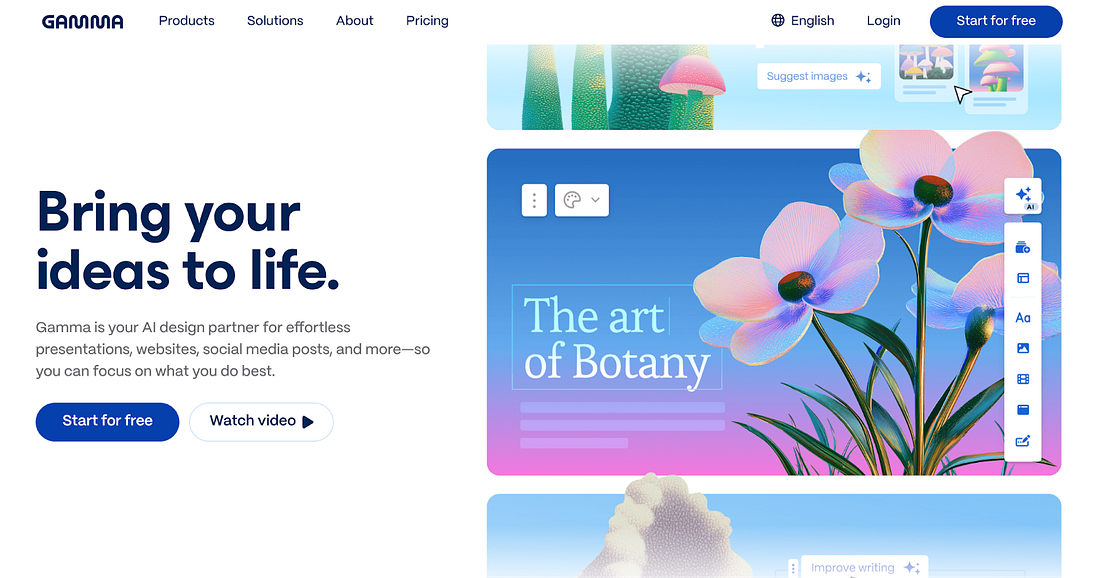
What everyone gets wrong: Spending weeks on perfect slides that nobody reads. What actually works: Ship something clear in an hour. Iterate based on actual feedback. Gamma raised $12M this year. Has 50 million users. Achieved profitability. Why? Because it solves a real problem. Investors spend 3 minutes and 44 seconds on average looking at your deck. Three minutes. Your perfect font choice doesn't matter. The workflow that actually works:
What smart people actually do:
Beyond fundraising:
Cost: Free for 3 presentations, $10/month unlimited Time saved: 15-20 hours per deck Reality: Can't handle complex financial models. Use Google Sheets embeds for that. Read their tutorial on how to create your first AI presentation. Tool #4: n8n (The Automation Platform That Actually Ships)
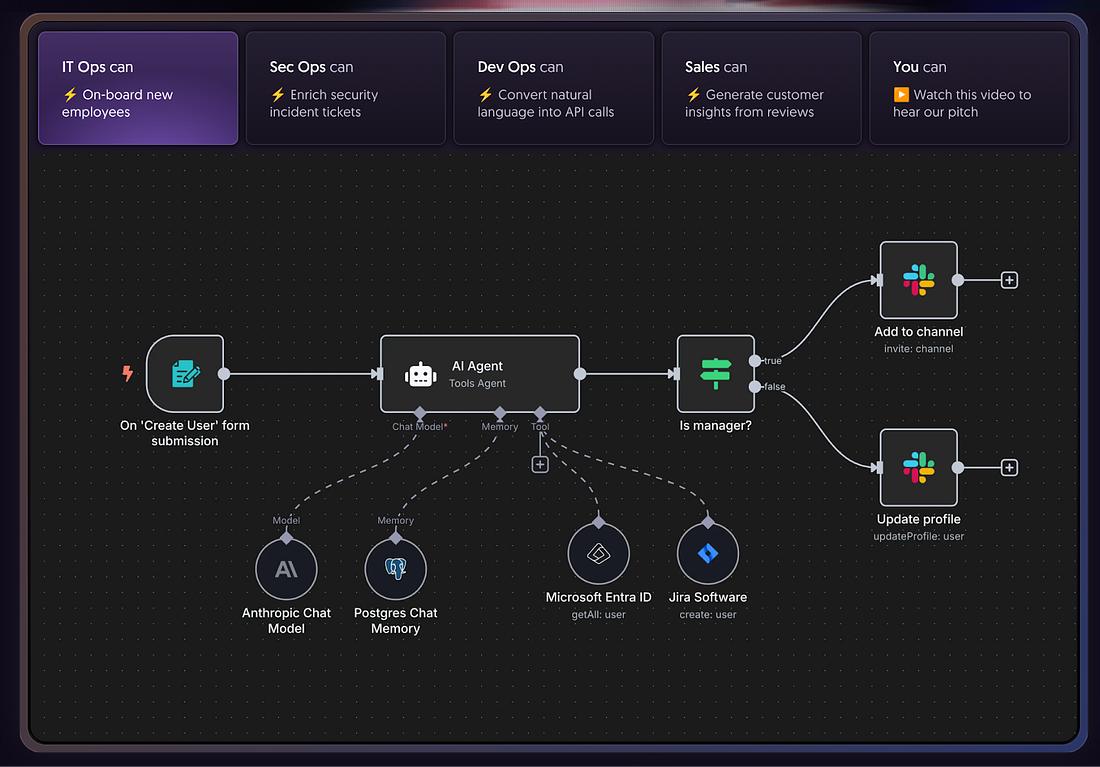
What everyone gets wrong: Thinking you need to code everything from scratch. What actually works: n8n lets you build real automations with both no-code simplicity and code flexibility when you need it. I built something that changed my mornings. Every newsletter I subscribe to gets analyzed by GPT-5 nano (costs pennies). Sends me one summary email instead of 47 separate ones. Took me 2 hours to build. Saves me 30 minutes every morning. The Gmail auth just worked. The OpenAI integration was seamless. No wrestling with documentation for days. My exact workflow that saves 30 minutes daily:
Why n8n beats other automation tools:
What people are actually building:
The learning curve:
Cost: Free self-hosted, cloud starts at reasonable prices Time to value: 2 hours to first useful automation Reality: Some complex logic still needs code. But 80% doesn't. Not sure how to get started, check out their very simple quick start guide. Tool #5: Claude (The AI That Actually Understands Context)
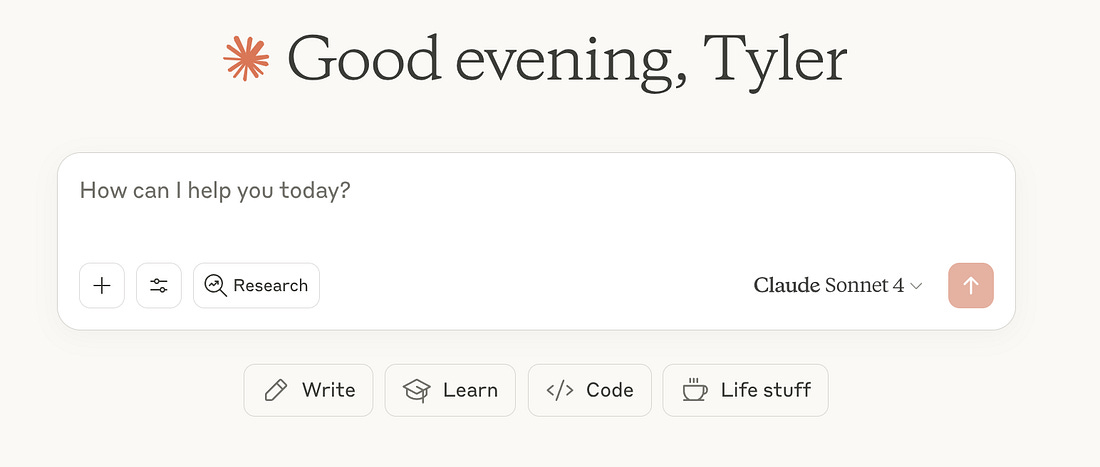
What everyone gets wrong: Using it like Google Search. That's like using a sports car in first gear. What actually works: Claude as a thought partner, editor, and system builder. I've spent months training Claude on my writing style. Fed it interviews with myself. Taught it my best practices. Built content research agents. The ideas are mine. The final version is mine. But Claude helps me think better, write faster, and catch things I miss. My exact Claude system:
What makes Claude different:
Advanced techniques I use daily:
The mindset shift: Claude isn't a writer. It's a thinking partner. The difference matters. Cost: $20/month for Pro Time saved: 10+ hours per week on content Warning: Never publish Claude's output directly. Always add your voice. Claude has some of the best tutorials out there, so definitely check out their academy. The Pattern Nobody Talks AboutThe people winning with AI aren't using it to replace their thinking. They're using it to think better. That colleague who got a 20% raise? They didn't learn a specific tool. They learned how to experiment. How to fail fast. How to integrate AI into their actual workflow. The tools are just tools. The mindset is everything. Your Next 48 Hours (Actually Do This)Today:
Tomorrow:
This Week:
This Month:
The Truth That MattersI've wasted money on bad tools. Spent hundreds of hours testing things that don't work. But here's what I learned: The best investment isn't in tools. It's in curiosity. The tools that win are the ones building systems, not features:
Stop collecting tools. Start solving problems. Stop waiting for perfect. Start shipping something. The game has changed. Most people haven't noticed yet. That's your advantage. Use it.
You're currently a free subscriber to next play. For the full experience, upgrade your subscription.
|
Reviewing the most useful AI tools for your career
Sunday, 14 September 2025





Subscribe to:
Post Comments (Atom)


No comments:
Post a Comment