
This is Brad DeLong's Grasping Reality—my attempt to make myself, and all of you out there in SubStackLand, smarter by writing where I have Value Above Replacement and shutting up where I do not… Why Cash Isn’t Truly King: Cash Transfers, Opportunity, and Real Engines of TransformationTo win the war on poverty, look beyond cash & toward the levers that truly unlock human potential...
To win the war on poverty, look beyond cash & toward the levers that truly unlock human potential...I was lucky enough to have a personal cash transfer program. It’s called an “inheritance”. And here I find Kelsey Piper saying that I, probably, largely wasted it—did not use it wisely and well—in a not-using-it-for-investment sense:
What is my guess as to what is going on? First, this finding is, on one level truly bizarre. We know as solidly as we know anything in social science here on God’s Green Earth that our social safety net of progressive programs show powerful effects on opportunity in America today:
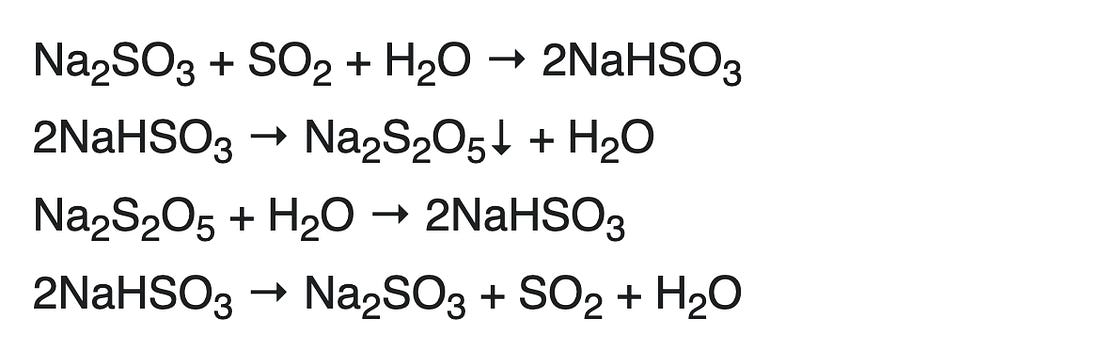
In summary, by raising family resources during childhood, transfers improve long-run human capital and earnings for kids, especially when benefits arrive early in life. Opportunity gains from transfers are largest when delivered earlier in childhood, aligning with dynamic complementarity: early resources make later investments more productive. Progressive tax credits raise pretax earnings (via labor-supply and job-match channels) while also raising children’s future earnings, indicating multipliers through both current and next-generation opportunity. Health-mediated channels matter: income supports (EITC/Medicaid) increase prenatal care, reduce smoking, and improve birth outcomes, which are strongly predictive of later cognitive and earnings trajectories. Transfers often operate via stress reduction: by easing material hardship and volatility, they improve parental mental health and bandwidth, which supports children’s learning and socioemotional development. Thus this null finding may well not be real—be one of those outlier throws of the statistical dice. As I said above, I was lucky enough to have a personal UBI. My maternal grandfather went bankrupt three times, I think, on his way to becoming the richest man between Tampa and Orlando. Along the way, he got his name attached to the Wellman-Lord process for cleaning-up the environment and acid rain. That process is an efficient alternative where wet scrubbing is not cost-effective, either where water is expensive, scale is small, sludge is not allowed, or recovery of pure SO2 is needed for plant operation.
Some of his money came to me and to my benefit: about $20,000 a year from birth up to roughly age 50. Of this personal UBI:
Did this personal UBI make he happier? Hell yes! Am I very grateful to my maternal grandfather for not losing more than half his money in wildcat oil speculation in the 1980s and 1990s, and passing down to us his descendants what he did not lose? Hell yes! Did I spend the extra money wisely and well? Kinda-sorta. But did this personal UBI transform my life? No. Did this personal UBI boost economic growth? No. The investments in my education that determine my skills and in human-connection network-construction that determine what opportunities I have to productively apply my skills were investments that would have been made anyway. Looking at my own experience with my private personal UBI, seeing it in context with the RCT UBI studies, and generalizing radically and well beyond the limits, I see life in America today as a situation in which resources can be placed into three buckets: (1) the current-cash bucket, (2) the grasping-the-opportunity bucket, and (3) the savings-investment bucket:
Committing resources to this third bucket is very difficult in America today. Puritan family norms, automatic payroll savings, harnessing the gambling instinct—but that often turns out badly. Those are the only way to really get it going. And those do not come attached to a UBI. The second bucket as well is much more of a culture-network psychological-sociological orientation thing than a constrained-by-cash thing. And with the increasing transformation of our society into one with a similar system to te Sui-dynasty keju (科举) set of barriers to opportunity, being unlucky enough to fail to pay attention in Math and English in fifth grade creates deficits that are then very hard to surpass. So UBI goes into the first bucket, and is used for necessities, conveniences, and some luxuries. This is fine. This is a good thing. Let me stress that. UBI is very much worth doing. But my experience suggests that life-transformation comes through opportunity—either now, or via savings-generated opportunities that are unlocked thirty years from now. Success at those would win the war on poverty as we know it. You can tell stories and make arguments that my élite rarified-air experience gives clues to what is going on with the UBI-like experiments for the poor Piper covers, and other similar programs. The first is that programs directed at the poor that expand demand without expanding supply of human-capital investments they might make are likely to have low returns. They provide liquidity without complements. They do not bundle the childcare slots, school quality improvements, or neonatal health clinics that would be neeed to convert resources into human-capital formation. Thus scale and saturation of opportunity may matter: Big effects may arise when programs buy admission into higher-opportunity environments (vouchers) or health systems (Medicaid). Cash cannot on its own expand the supply of quality schools, clinics, or housing. And so unconditional cash for the poor who do not have robust access to supply networks winds up boosting consumption and leisure, but not investment in any sense. The second is that the EITC is special because of its work-tied salience. EITC is paid through the tax system and tied to work, making it more salient as an “earnings booster” that families channel into child investments. Plus the EITC’s work-contingent phase-in/plateau embeds a nudge toward labor supply, raising earned income and complementary human-capital investments for children. Cash stipends lack this framing, and with no contingencies plausibly reduce labor supply. Plus there is, more generally, a powerful element of in-kind targeting of binding constraints: SNAP directly relaxes nutrition constraints that impede school attention and attendance, and thus learning. Mental bandwidth is an important consideration in itself. In-kind supports reduce toxic stress from food and medical insecurity, freeing parental bandwidth for thinking about child investment. Generic cash fails to durably remove these specific stressors. Vouchers and Medicaid embed case management and provider networks that translate benefits into services, thus providng information and take-up externalities. Cash provides no navigational help through complex opportunity markets. Then there are programs that are tied to and aimed at critical developmental windows: Medicaid, SNAP, and early-life credits hit during pregnancy and early childhood, when returns to investment are highest; adult-targeted cash misses that window. Early-life nutrition returns are especially powerful: Food Stamps/SNAP expansions before age five yield adult gains in education, earnings, neighborhood quality, and longevity—mechanisms cash did not replicate in recent U.S. experiments. Targeting toward children really does matter: EITC/CTC expansions disproportionately reach households with children at moments of high marginal returns; adult-focused UBI spreads money thinly across recipients with heterogeneous goals. Maternal and infant health mechanisms appear very often to be key: EITC improves infant health via more prenatal care and reduced smoking, seeding later cognitive and educational gains; unconditional cash hasn’t shown comparable maternal/infant health improvements And health-mediated gains are very important: Medicaid improves prenatal care and reduces later disability, raising employability and earnings decades later—a pathway cash stipends don’t consistently activate. Improving predictability and providing stability may matter: entitlement-linked in-kind benefits reduce income volatility, which is strongly related to lower food hardship and better child routines; one-off or short-lived cash programs don’t. Duration and dose of exposure may matter: Voucher and Medicaid effects scale with years of exposure; many UBI-like pilots are short duration and too small to change long-run trajectories. Networks certainly do matter, hence the success of things that utilize neighborhood channels: Housing vouchers directly move children to lower-poverty neighborhoods with better schools and peers, raising college attendance and adult earnings. Peer and school effects are powerful: Housing vouchers relocate children into peer groups and schools with higher expectations and resources; cash rarely changes peer/school context, a major driver of human-capital accumulation. Cash rarely produces a move to high-opportunity places. Looking at my own experience with my private personal UBI, seeing it in context with the RCT cash-gift studies, and considering it in the context of the broader human-capital formation and poverty-reduction literatures, should I think rise your Bayesian credence in my seeing life in America today as a situation in which resources can be placed into three buckets: (1) the current-cash bucket, (2) the grasping-the-opportunity bucket, and (3) the savings-investment bucket—and buckets (3) and (2) are, for the poor especially, not that easy to access. It was probably a black day for human knowledge when Gary Becker coined the term “human capital”. Building human capital is not taking a sum of money down to the bank and frictionlessly depositing it in some place where it becomes an income-producing financial asset, as the transformation of the societal power to act and do into real machines and production networks is then handed off to others. You have to handle the transformation of societal power in the form of money to skills and network connections that are the opportunity to use them yourself. And so accessing second bucket as well is much more of a culture-network psychological-sociological orientation thing than a constrained-by-cash thing. And with the increasing transformation of our society into one with a similar system to te Sui-dynasty keju-examination (科举) set of barriers to opportunity, being unlucky enough to fail to pay attention in Math and English in fifth grade creates deficits that are then very hard to surpass. So a cash transfer goes into the first bucket, and is used for necessities, conveniences, and some luxuries. This is fine. This is a good thing. Let me stress that. this is very much worth doing. But all I see suggests that life-transformation comes through opportunity—either now, or via savings-generated opportunities that are unlocked thirty years from now. Success at those would win the war on poverty as we know it. And all these problems are likely to become much more fraught in the coming decade. Building skills today is, increasingly, less about grabbin and then oneself hoarding knowledge and more about joining the HCMASI—Humanity’s Collective Mind Anthology Super-Intelligence. Modern prosperity comes from weaving ourselves into dense networks of information, expertise, and institutional memory. The successful individual is not the one with the biggest fact bank, but the one who functions as a strong node—acting, processing information, and enabling communication within this human web that is supersmart that is the HCMASI: not some Artificial Super-Intelligence some maddened Silicon Valley billionaire TechBro will demand be constructed, but that we have all together built over the past 5000 years since the invention of writing made us a global, rather than a local village, and a time-binding past present and future, rather than just a here and now, superscale rather than auditory-distance anthology intelligencce. Mass education, research institutes, and digital platforms have all further multiplied our ability to connect, learn, and act together(see: YouTube tutorials and AI assistants are the latest expressions of this long arc that have hit me. Once, mastering tools or machines required long training or thick manuals. Now a ten-minute YouTube video can make me a competent dishwasher repairman. This democratization of skill-building extends the reach of mass education, well, massively. For society, YouTube-style tools are positive-sum, making problem-solving cheaper and more widespread. MAMLMs—Modern Advanced Machine-Learning Models—may bring a new leap. They could act as “information butlers,” filtering noise and aligning knowledge with my aims. society as a whole, MAMLMs may be closer to zero-sum than YouTube videos are: MAMLMs may well matter less for collective productivity, as better ways of filtering collide with the production of AI-slop at megascale. But they may well be decisive edges for those attempting careers like like mine. The fact is: practical and informational skill-building is always very social social. Progress comes fastest when access to the HCMASI—the human collective mind—is broad, not confined to elites. The HCMASI is a wise super-intelligence, storing and organizing more than any individual brain. Open-source software and Wikipedia show what collective problem-solving can do. Alone, you are weak. And stupid. You forget your keys, step into the shower and slip on the soap, and give passwords to phishing emails. Human frailty makes collective systems essential. The future depends on keeping strong connection to the HCMASI open to all, not restricted to a privileged few. Yet how we make such connections really is rapidly changing. Hence how we plug ourselves into the HCMASI—Humanity’s Collective Mind Anthology Super-Intelligence—so that we can grasp opportunity is changing in ways we do not yet see clearly. The twentieth century gave us institutions like the research university, the corporate laboratory, and the professional association, each a structure for channeling human intelligence into collective problem-solving. Today, the internet, online forums, Wikipedia, YouTube tutorials, and GitHub repositories are the latest platforms through which we tap into the HCMASI. The next stage will look different still. Large-scale machine-learning models and AI assistants are beginning to act not just as repositories but as intermediaries, filtering, contextualizing, and personalizing access to the collective mind. We do not yet know how this new layer will reshape opportunity: whether it will amplify democratization, as the spread of mass education once did, or whether it will entrench advantage by giving the already-privileged even more powerful tools. As with the spread of literacy or electrification—technologies whose consequences were not foreseen at their birth—the shape of this new connection remains unclear Similarly, how, in the context of the changing HCMASI, we build and maintain and utilize the networks that offer us opportunities that we can grasp are changing, also in ways we do not yet see clearly. In the twentieth century, such networks took the form of industrial research laboratories, trade unions, and government agencies, all of which structured collaboration and coordinated knowledge and opportunity at scale. Think of Bell Labs, which not only produced the transistor but also laid the foundations for information theory, or the New Deal’s Tennessee Valley Authority, which combined engineering, policy, and community-building to electrify a vast swath of America. Just as mass electrification or universal secondary education reshaped opportunities and networks in ways unforeseen at their inception, the emerging Order, whatever it turns out to be, layered on top of the coming Attention Info-Bio Tech mode of production will reorder who gets to participate and how. Their contours will define the next stage of prosperity—or its absence—just as earlier institutional networks shaped the long twentieth century Thus much thought and action are needed right now. Much thought and action as to how to roll with things and generate ways to better connect more people in changing ways to the HCMASI—the Humanity’s Collective Mind Anthology Super-Intelligence—so that they can be more useful and effective action-taking and information processing-communicating nodes for it. And this is changing right now. Are these problems we face right now especially special in degree? Is the pace of change speeding up? Perhaps. But I would say no. I would say it sped-up starting in 1770, and then really sped-up again starting in 1870, but since 1870 the pace of change has been roughly the same: transformative over each generation, but not more rapid than that. What we are seeing now is change at the normal post-1870 pace that has shifted us from SteamPower Capital; to Applied-Science Belle Époque, to Mass-Production New Deal, to Globalized Value-Chain Neoliberal, and now to the Attention Info-Bio Tech Order Age that we are now moving into. Perhaps our problems are different in kind, as our industrial revolutions are about information and communication rather than matter and energy manipulation. Perhaps that makes a real difference. But still, this—“all that is solid melts into air” under pressure of human technological revolution—has been the human condition since 1770, at least, with only one solid increase in its pace with the 1870 Second Industrial Revolution’s coming. By now we should be more used to dealing with this than we are. References:
Hoynes, Hilary, Doug Miller, & David Simon. 2015. “Income, the Earned Income Tax Credit, a&nd Infant Health.” American Economic Journal: Economic Policy 7(1): 172–211. <https://www.aeaweb.org/articles?id=10.1257/pol.20120179>.
If reading this gets you Value Above Replacement, then become a free subscriber to this newsletter. And forward it! And if your VAR from this newsletter is in the three digits or more each year, please become a paid subscriber! I am trying to make you readers—and myself—smarter. Please tell me if I succeed, or how I fail… #on-ubi |



| ||||||||||


No comments:
Post a Comment