
How to build an AI company in a new marketBehind-the-scenes with Delphi and their vision to build a digital mind
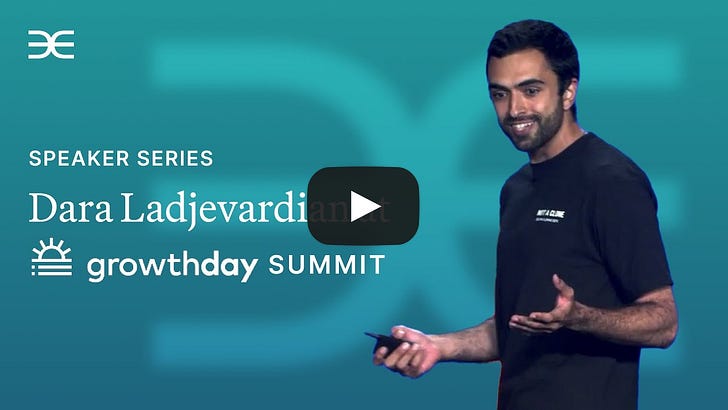
✨ Hey there this is a free edition of next play’s newsletter, where we share under-the-radar opportunities to help you figure out what’s next in your journey. It is hard to predict the future - but there are at least two ways to react to new emerging technologies like AI and try to think about how they may change the world. The first is more straightforward. Simply look at large existing industries—like finance, healthcare, etc.—and figure out how this new technology can help automate frictionful processes to reduce costs and result in a better end customer experience. In the past few weeks, we have covered several startups taking this sort of approach. The second lens requires a bit more vision and perhaps imagination. It’s thinking about new technology as a vehicle for opening up brand new categories—things that have never existed before that are now possible as a result of some sort of big innovation. For an obvious example, there were not really any mobile apps before mobile became sufficiently low cost and accessible, and now some of the biggest companies in the world make most of their money on mobile. This type of company—the one that defines a brand new market—is, in many ways, harder to get right because there is far less of a status quo to lean on, and there’s a lot more you have to invent. But when you do “get it right” and find product-market fit in a brand new category, you end up with many big advantages. There is far less competition. You get to build a huge headstart before anyone else. And because you are first, your brand often becomes synonymous with the category, so you have the opportunity to build really sticky relationships with your customers. There’s not many startups we meet that make convincing pitches as to why they have successfully opened up a new market. It’s one thing to talk about an idea of the future—it’s another thing entirely to actually build it. But Dara Ladjevardian, the cofounder and CEO of Delphi, has made a pretty compelling case for why the Delphi team is well on their way. They have tripled revenue since January, and are being pulled by the market in all sorts of exciting directions. What are they building? He describes it as “A digital version of your mind that people can talk to, learn from, and you can get insights from. More like an interactive personal profile than a chatbot.” You can see Dara’s Delphi profile here. Because it’s not exactly obvious, here is how using Delphi works: You start by linking your existing content - writing, videos, podcasts, books - to a self-updating Digital Mind that people can call, text, or video chat with. Delphi matches the way you speak, write, and think, so when someone has a conversation with your Delphi, it feels kinda like they're talking with you. This pitch has led to thousands of customers (primarily people like coaches, business owners, consultants,influencers and professors) as well as backing from investors like Sequoia, Menlo, Founders Fund, Lux Capital, and many others. And they’ve done this all with a pretty lean team (yes they are hiring in engineering, growth, people, design, and more). We thought it’d be useful to go behind the scenes with the Delphi team—to specifically learn a bit more about what it’s like to work at the company, how they got here, and where they are headed.
Major thanks to the Delphi team for sharing behind-the-scenes details and supporting Next Play. Inventing a new type of product in a brand new market using a new type of technology requires vision. Some of the most influential companies come from unexpected places and are not exactly obvious or popular immediately.
It’s easy to look at other people’s vision for inspiration—but rarely does that lead somewhere very innovative.
Delphi was born from a very personal experience for Dara.
He’s taken this experience as inspiration for the plan behind Delphi.
 By communicating a clear vision, Dara and his cofounder Sam have been able to recruit a uniquely mission-aligned team. Optimizing for mission-alignment may be an important aspect of building a product in a brand new category. They explicitly hire missionaries, not mercenaries. People who are excited by the long-term vision for the product.
People who consider work as a big aspect of their life.
People who will become super users of their own product.
People who can think really big picture—not just optimize for the next funding round but actually care about the long-term impact of their work.
People who bring optimism to hard problems.
People who are really willing to do whatever it takes to make the vision a reality.
The leadership at Delphi seems to care far more about results than they do about traditional pedigree. If you hire people who are too stuck in the status quo, it can be hard to be inventive or creative.
But many people at Delphi come from rather unconventional backgrounds:
They bet on people’s growth and invest in their potential.
And they’ve succeeded, and been given tremendous responsibility to make an impact.
There is an intense focus on getting things done.
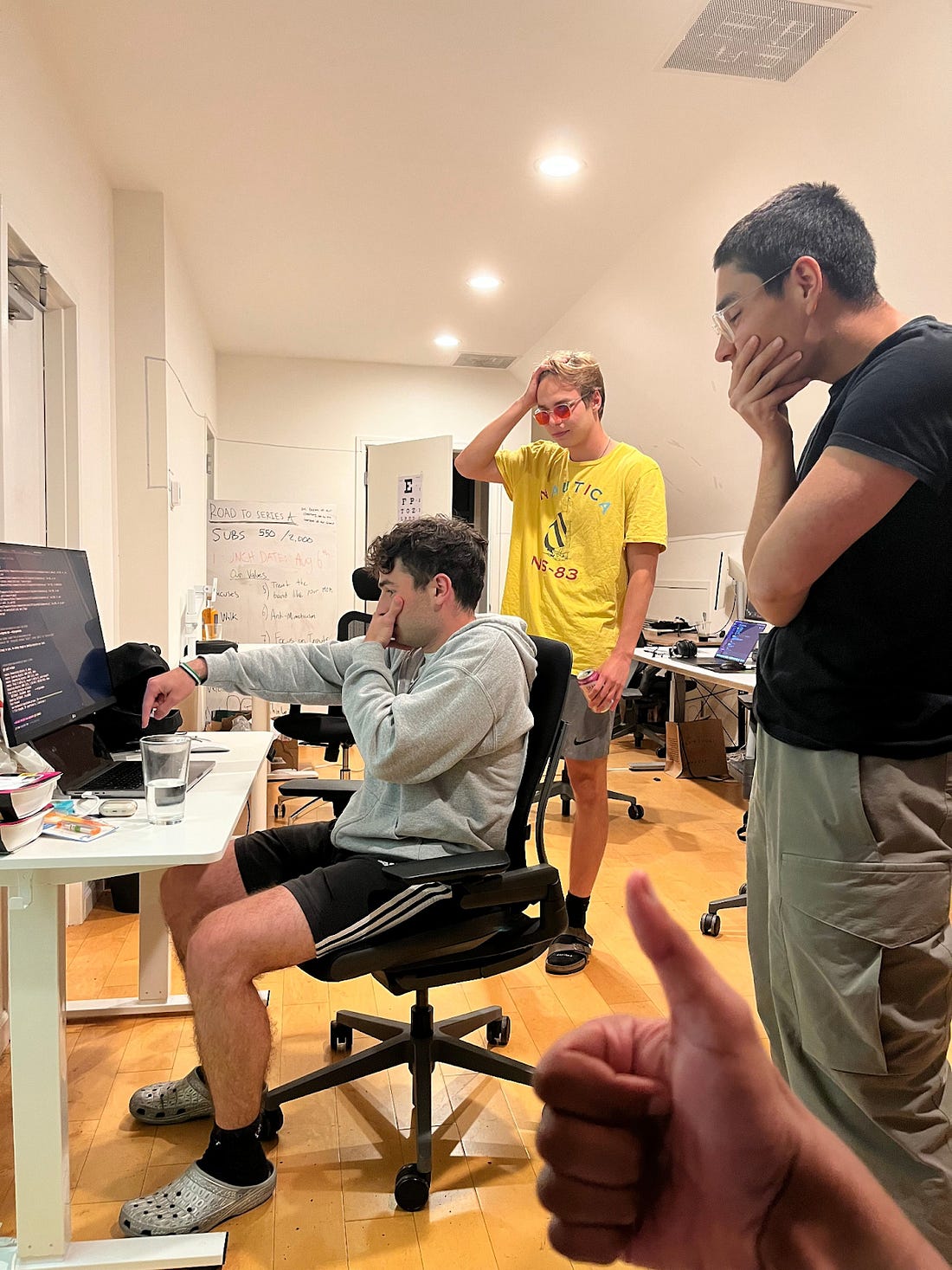
Because they are nearly all in person, they are able to balance that focus with hanging out and sharing ideas.
In summary, I think what really stands out about Delphi is how aligned they are on their mission.
Nearly every person we spoke with brought up the long-term vision for the company as a big motivator as to why they (and perhaps you?) joined the company.
They are also hiring for many roles in SF across engineering, design, marketing, and people. Apply here. And if you are looking to explore more opportunities, be sure to check out Next Play. You're currently a free subscriber to next play. For the full experience, upgrade your subscription.
|
How to build an AI company in a new market
Thursday, 21 August 2025







Subscribe to:
Post Comments (Atom)


No comments:
Post a Comment