
✨ Hey there this is a paid edition of next play’s newsletter, where we share under-the-radar opportunities to help you figure out what’s next in your journey. Join our private Slack community here and access $1000s of dollars of product discounts here. We just ran a job-seeker survey and also analyzed 20+ of the hottest growth stage private tech companies in an effort to understand what candidates are looking for and what types of people (skills, backgrounds, etc.) are actually getting hired. Here are some of the most useful insights we found:
We’ll dig into the data, and share some commentary around why we think we’re seeing these trends, and how you can use this information to your advantage. Hope it’s useful! Would be curious what numbers stand out… Quick background on our approach: We surveyed approximately 500 job-seekers, primarily US-based. We also analyzed data from LinkedIn and open job postings across 23 top growth stage tech startups. Most of the companies have 200+ employees. This resulted in 4,145 job postings and 8,087 employees overall. We think the results are at least slightly imprecise (e.g. some employees do not show up on Linkedin) but at minimum should be useful for trend identification.
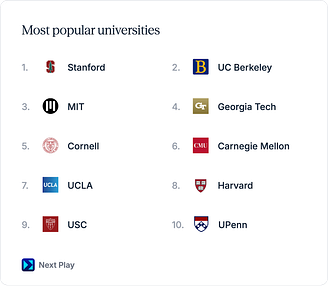
Startup job market analysis (early 2026)I wanted to share one more caution before we dive into the trends. It’s something I strongly believe: you can be an outlier. I think it’s helpful to remember that statistics can be helpful but also very misleading. I would hate for this information to make you more or less pessimistic for e.g. your chances of getting hired at a great company. The averages are just the averages, and in general what I’m seeing is tons of opportunity, regardless of your existing background or skillset. If you are looking to get hired at a great company, I suggest some of this advice. It should help you beat the averages: If there’s more you have questions about, email us: hi@nextplay.so. And now, the trends: 26% of new hires previously attended an “elite” university.
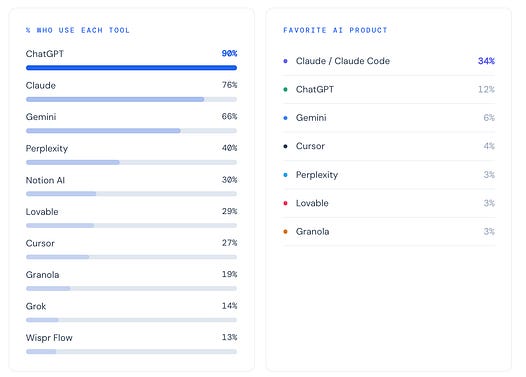
It may help your odds but the majority of new hires did not previously attend an elite university. The tech industry is far from perfect but I think it does a pretty good job of rewarding hard work over credentials. 90% of job-seekers say they use ChatGPT but 34% name Claude as their favorite product.(Note that about 50% of respondents would describe themselves as non-technical)
While ChatGPT is more universally known, it seems like Claude may have reached a deeper product-market fit amongst job-seekers. Super curious to see how this will evolve.
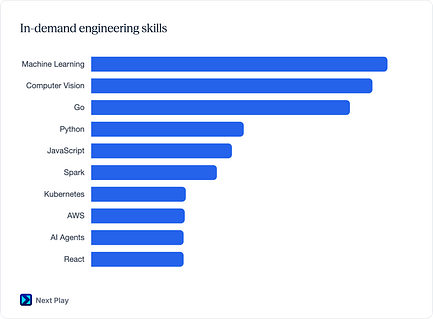
The most popular degree people have is in Computer Science (24.8%). 42.5% of open engineering roles mention Machine Learning.
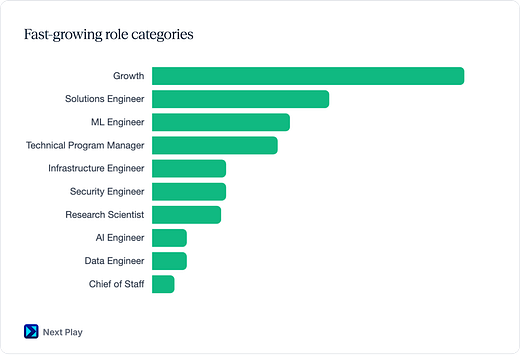
Would be curious to see how this changes over the next decade. Will computer science and software engineering still be popular and how will it evolve? Growth roles are becoming increasingly popular.
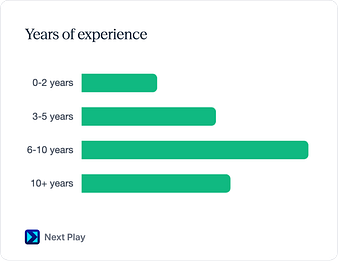
It used to be the case that a company’s revenue department was made up of marketing and sales. Over the past decade or so, we’ve seen the introduction of “Growth.” (By the way, if you want to learn more about growth, check out The GTM Engineer newsletter) The median new hire had 6.6 years of previous work experience.
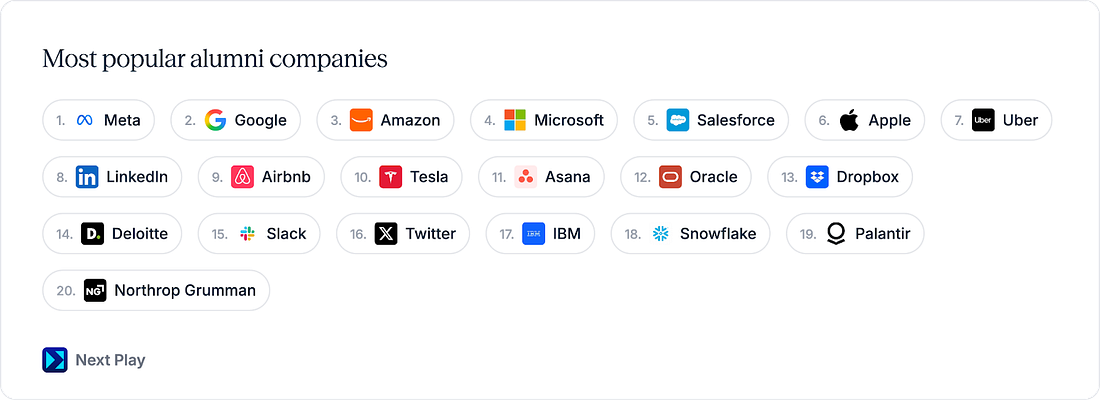
19.1% of the recent hires have previously worked at FAANG. 8.1% came directly from FAANG.
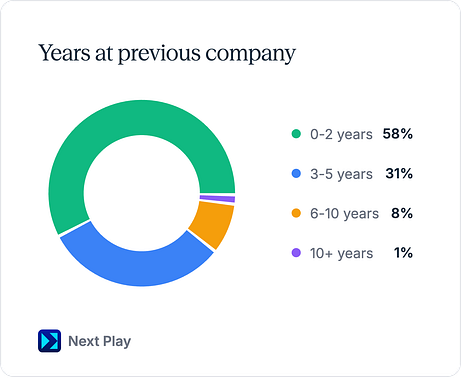
The median new hire spent 1.5 years at their previous company.
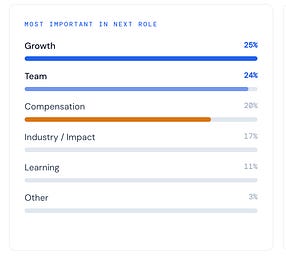
People are looking to join fast-growing companies with high quality teammates.
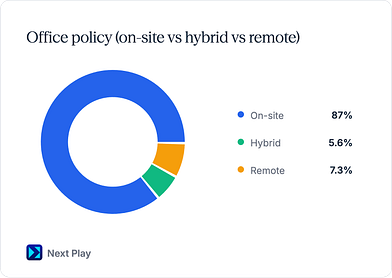
Growth and team are the most critical categories of what people are looking for when they are looking to join a startup. 7.3% of open roles seem to be open to remote work.
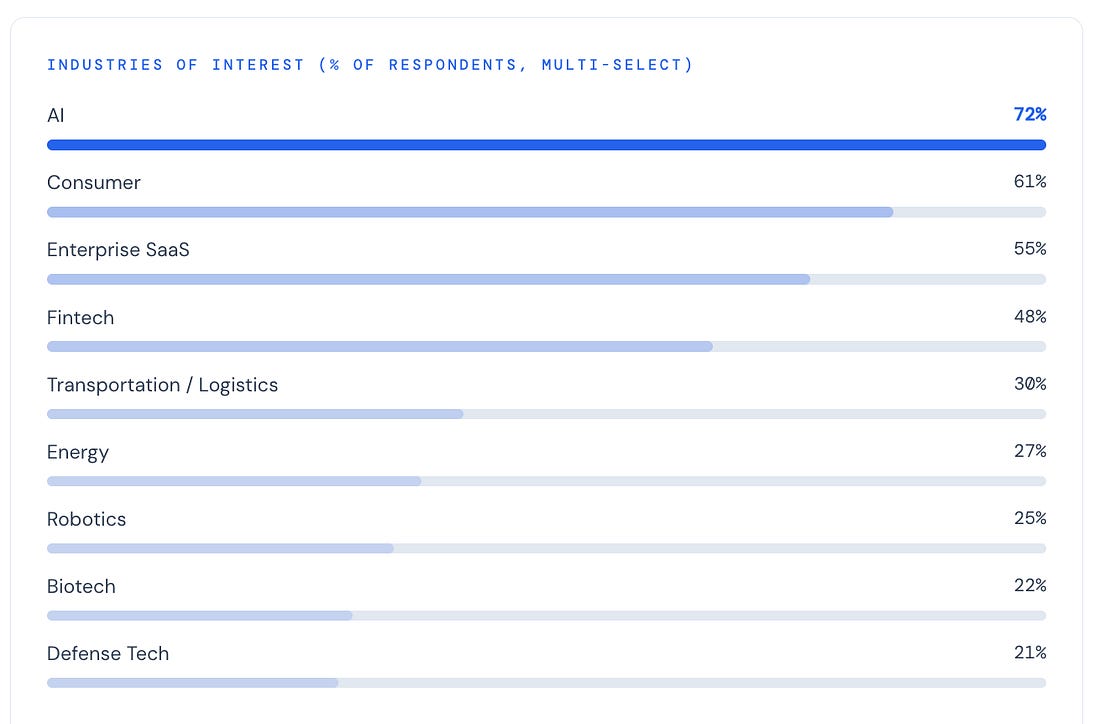
It seems like most growth stage companies are heavily biasing towards in-person work, but they to tend to have multiple office locations. 72% of people are explicitly looking to work at an AI company.
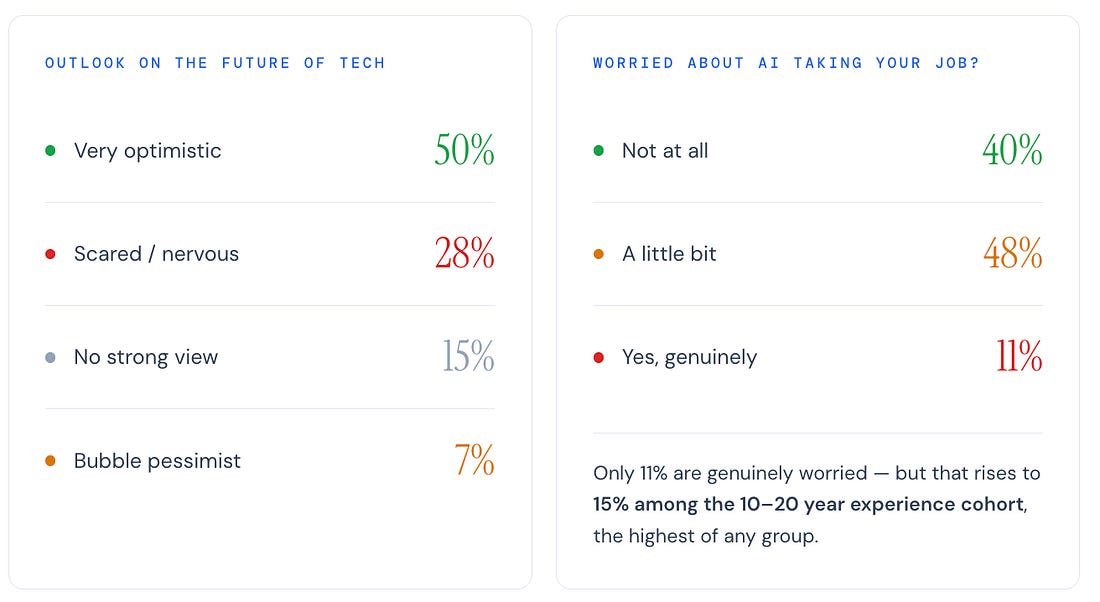
That being said, some people are quite nervous about AI taking their job:
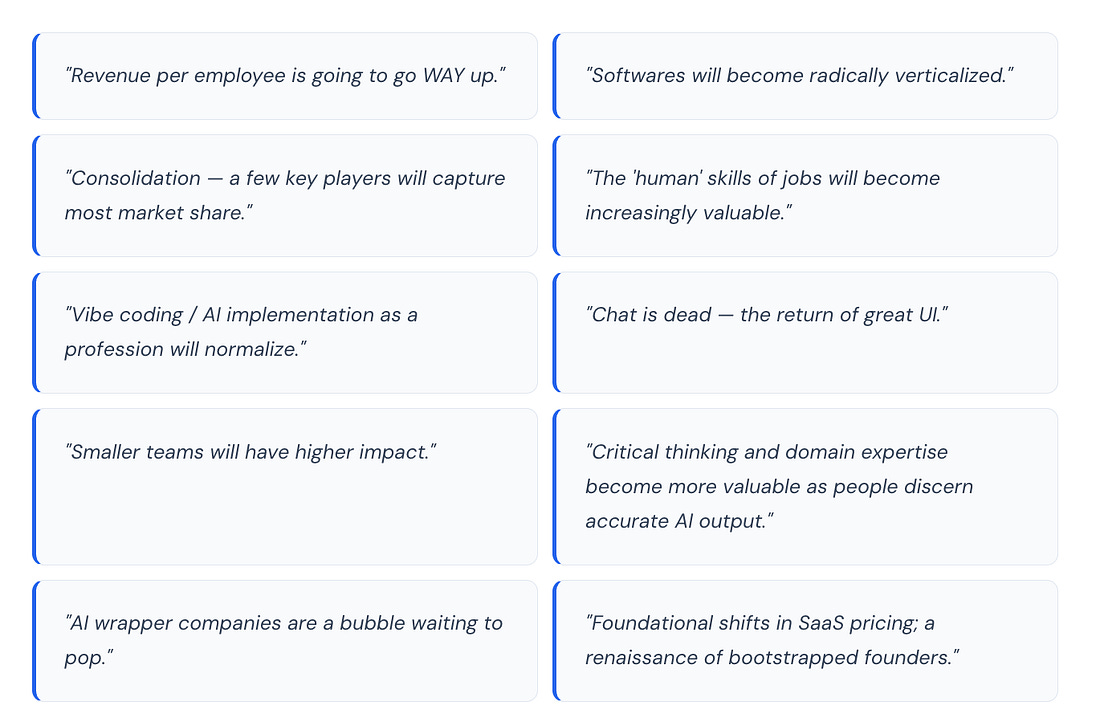
We asked people what predictions they had for the future, here’s what they had to say:
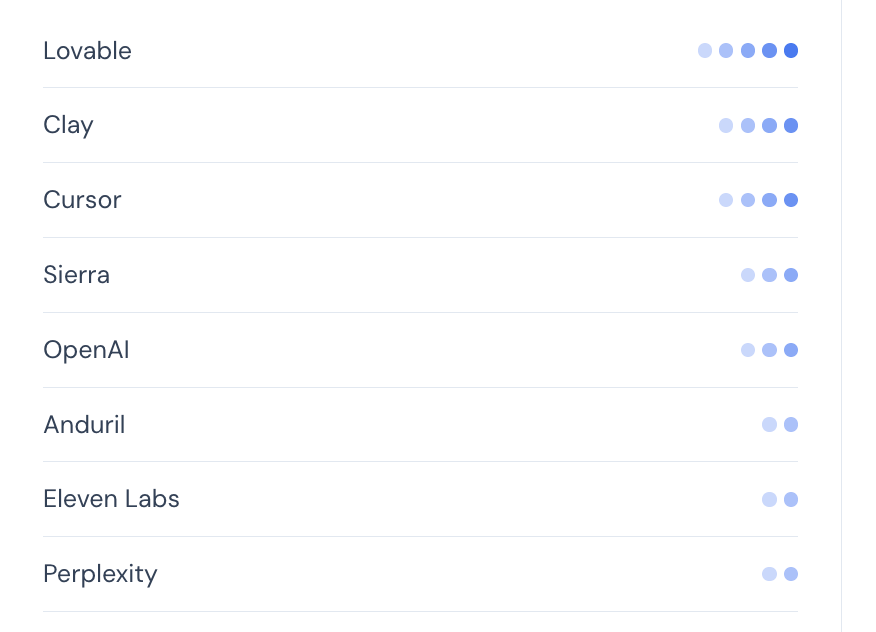
And here are some of the most commonly named startups people would be excited to join.
Hope you found interesting and useful. Email us: hi@nextplay.so if you have any questions. You're currently a free subscriber to next play. For the full experience, upgrade your subscription.
|
Startup job market analysis 2026
Sunday, 8 March 2026





Subscribe to:
Post Comments (Atom)


No comments:
Post a Comment