
The hidden reality of AI-Driven development (Sponsored)
There is a new “velocity tax” in software development. As AI adoption grows, your teams aren’t necessarily working less—they are spending 25% of their week fixing and securing AI-generated code. This hidden cost creates a verification bottleneck that stalls innovation. Sonar provides the automated, trusted analysis needed to bridge the gap between AI speed and production-grade quality. The main problem with standard RAG systems isn’t the retrieval or the generation. It’s that nothing sits in the middle deciding whether the retrieval was actually good enough before the generation happens. Standard RAG is a pipeline where information flows in one direction, from query to retrieval to response, with no checkpoint and no second chance. This works fine for simple questions with obvious answers. However, the moment a query gets ambiguous, or the answer is spread across multiple documents, or the first retrieval pulls back something that looks good but isn’t, RAG starts losing value. Agentic RAG attempts to fix this problem. It is based on a single question: what if the system could pause and think before answering? In this article, we will look at how agentic RAG works, how it improves upon standard RAG, and the trade-offs that should be considered.
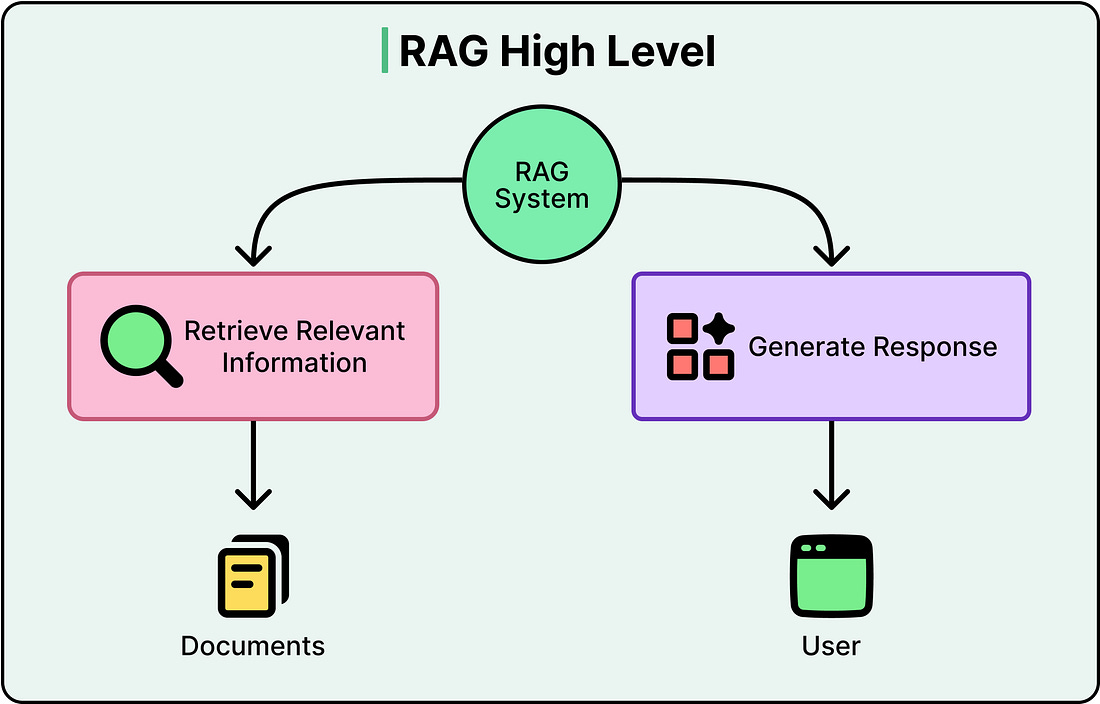
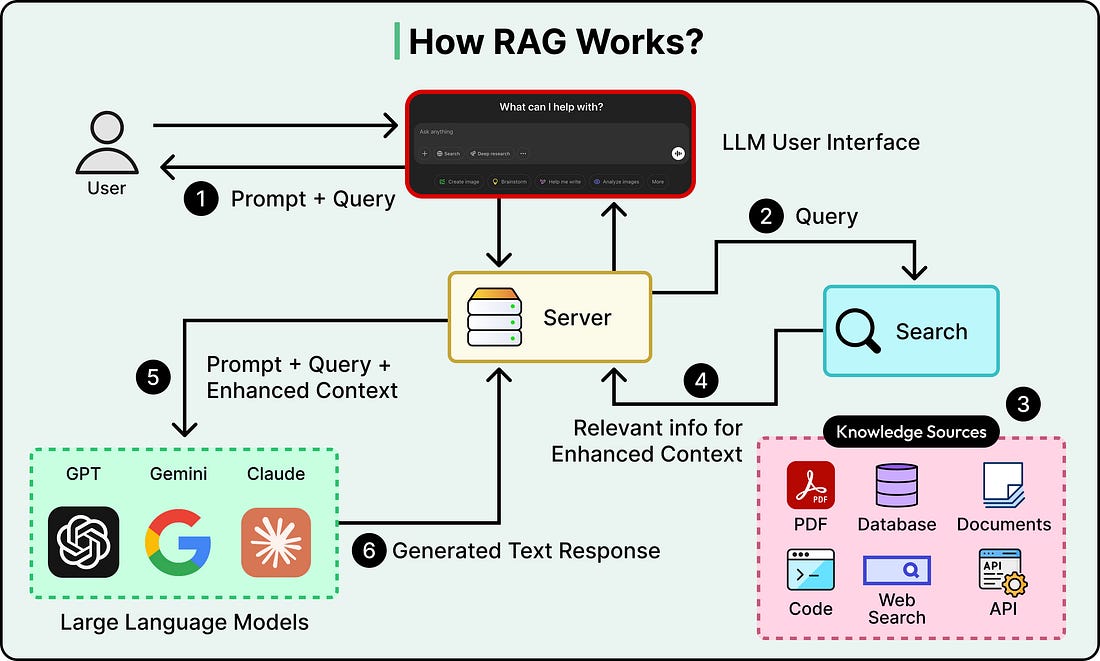
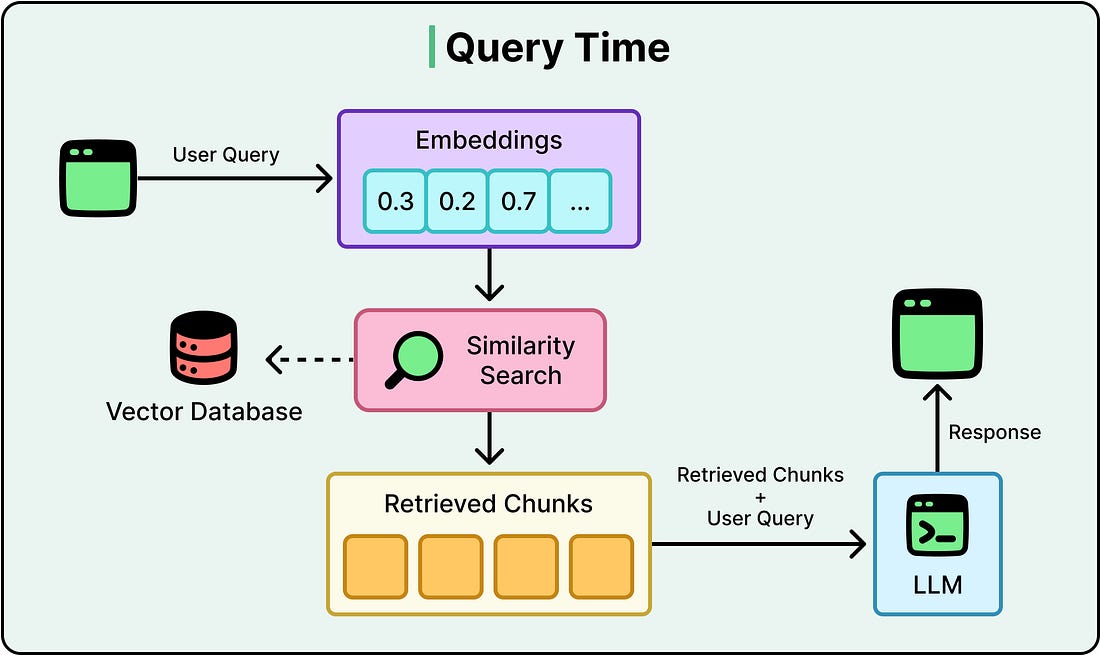
One Query and One RetrievalTo understand what Agentic RAG fixes, we need to be clear about how standard RAG works and where it falls short. A standard RAG pipeline has a straightforward flow:
See the diagram below:
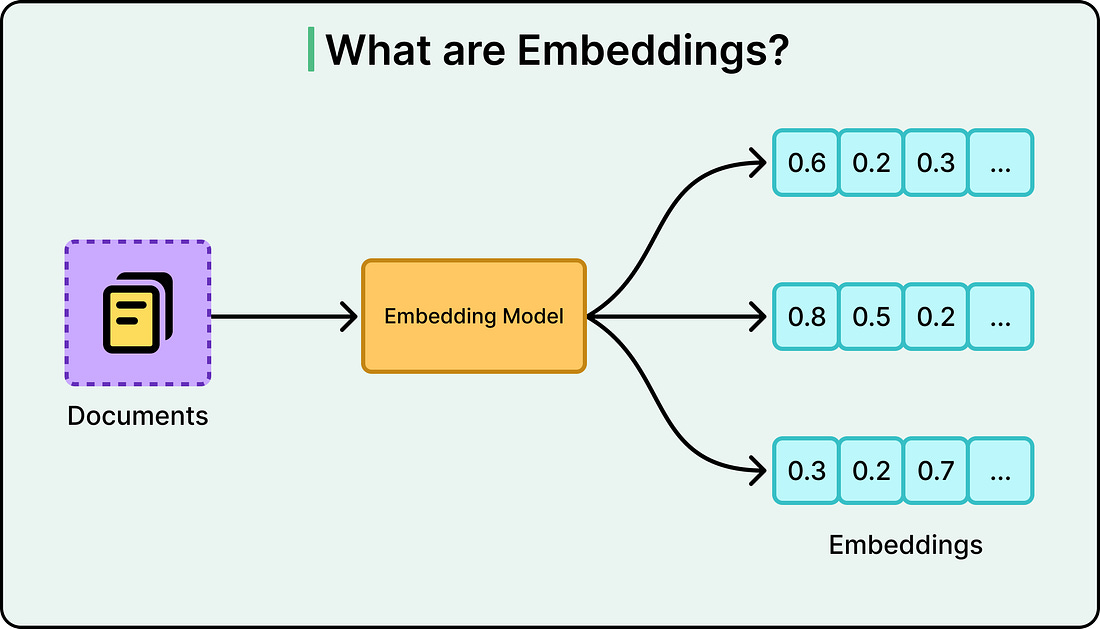
The diagram below shows what embeddings typically look like:
This works extremely well for direct and unambiguous questions against a well-organized knowledge base. Think of questions like “What’s our return policy?” A clean documentation corpus will get a solid answer almost every time. Here’s how typical query flow looks like:
The problems show up when queries get more complex. Here are a few scenarios:
These three failure modes share the same root cause. The system does not reflect what it retrieved. It can’t ask itself whether the results were good enough. AI companies aren’t scraping Google (Sponsored)
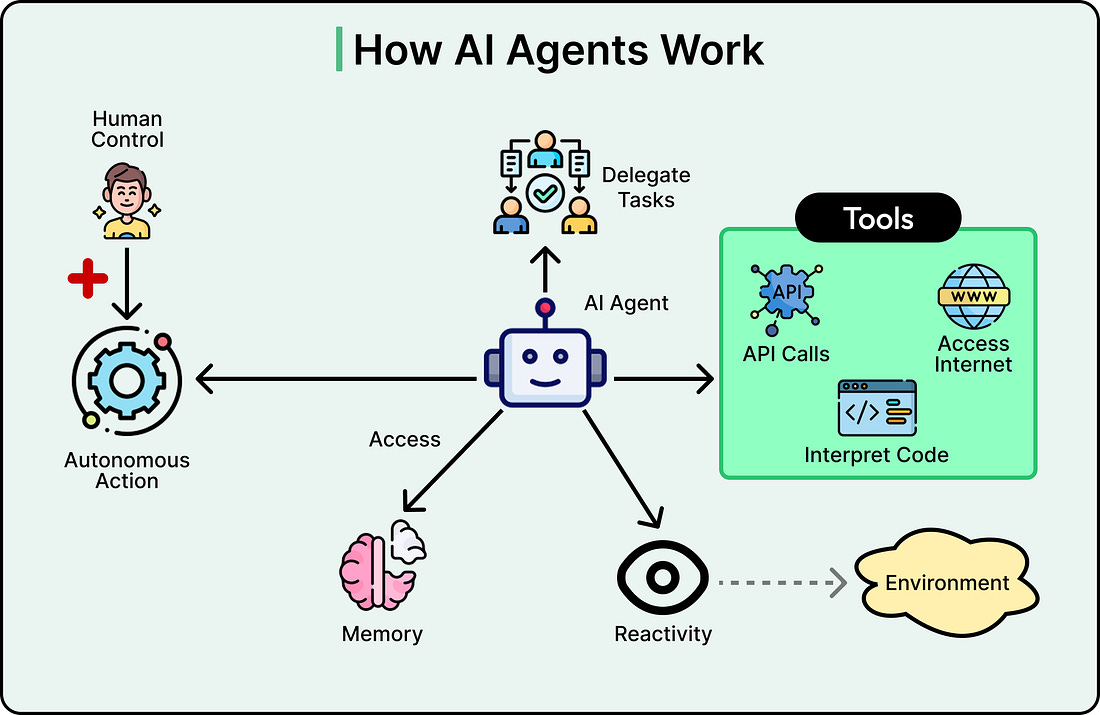
They’re using SerpApi: the industry-standard Web Search API that shares access to search engines with a simple API. Trusted by Uber, NVIDIA, and more. Start with 250 free credits/month. From Pipeline to Control LoopAgentic RAG replaces that linear pipeline with a loop by bringing the capabilities of AI agents into the mix. At its core, an AI agent is a software system that can perceive its environment, make decisions, and take actions to achieve specific goals with some degree of independence. The word “agent” is key here. Just as a travel agent acts on our behalf to find flights and negotiate deals, an AI agent acts on behalf of users or systems to accomplish tasks without needing constant guidance for every single step. See the diagram below that illustrates the concept of an AI agent:
In Agentic RAG, instead of retrieve-then-generate, the flow becomes: retrieve, evaluate what came back, decide whether to answer or try again, and if needed, retrieve differently. See the diagram below:
The word “agentic” might sound like a marketing push, but in this context, an agent is an LLM that has been given the ability to make decisions and call tools. Think of it as an LLM that, instead of just generating text, can also choose to take actions such as running a search, querying a database, calling an API, or deciding that it needs more information before responding. This gives the system three capabilities that standard RAG lacks.
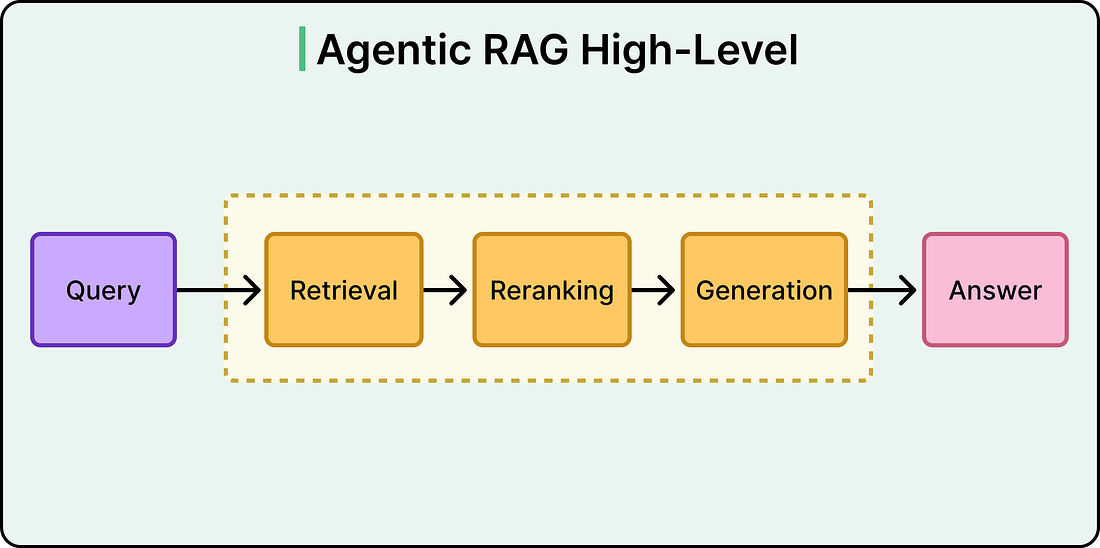
See the diagram below that shows Agentic RAG approach on a high-level:
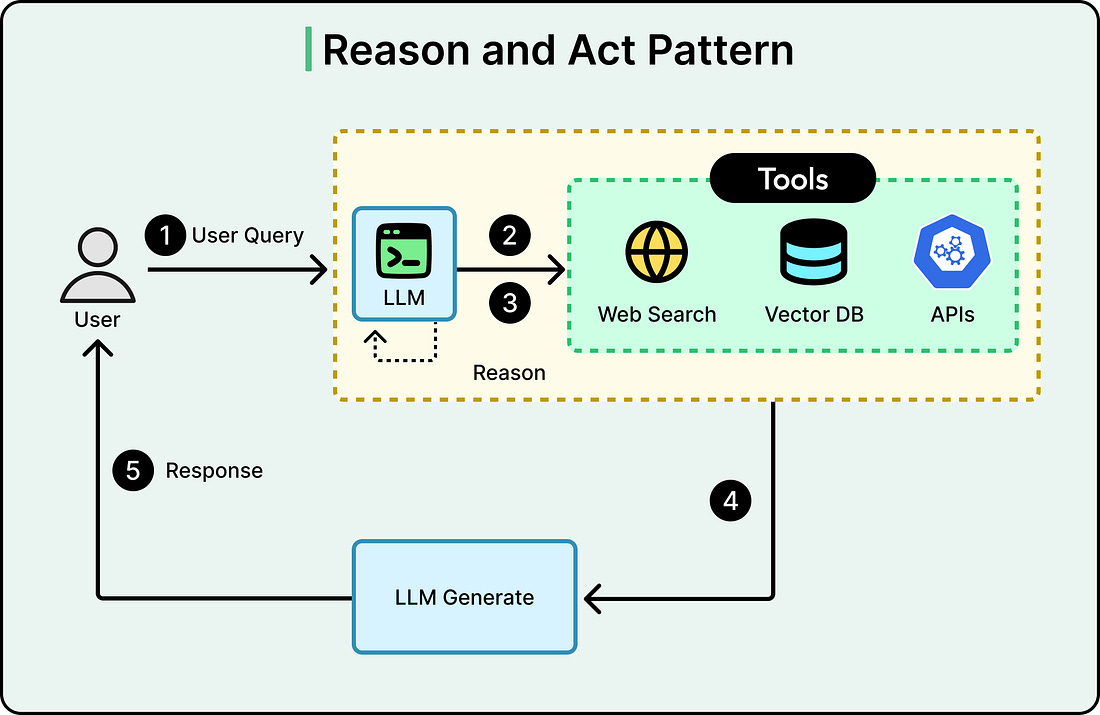
However, it’s misleading to think of Agentic RAG as a binary switch. In its simplest form, it’s like a router that decides which of two or three knowledge bases to query. That’s already a meaningful upgrade over standard RAG for multi-source environments. Further along the spectrum, you get systems like ReAct (short for Reasoning + Acting), a framework where the agent alternates between reasoning about what it knows and taking actions to learn more, running multiple retrieval steps with evaluation between each one. See the diagram below:
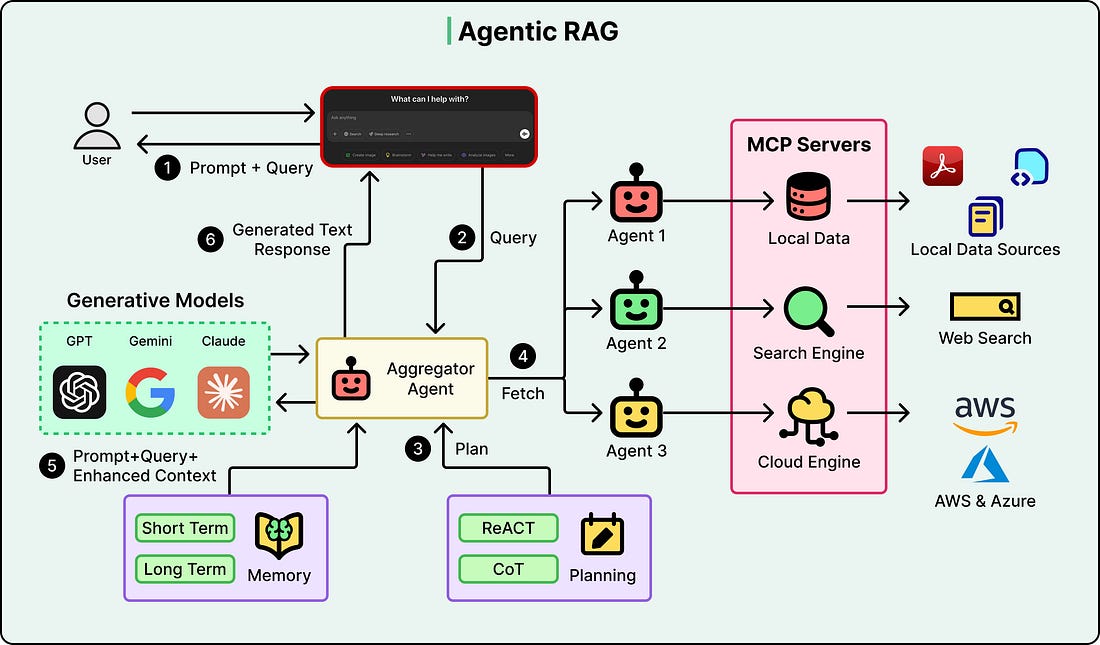
At the far end sit multi-agent systems where specialized agents collaborate, coordinated by an orchestrator. Query Refinement, Routing, and Self-CorrectionThe control loop is a useful mental model. However, it can be understood better when mapped back to the failure modes from earlier.
These three capabilities map directly to the three failure modes. Agentic RAG was designed specifically to address the gaps where standard RAG’s one-shot approach falls short. There are additional agentic capabilities beyond these three, like memory and semantic caching, which allow the system to retain context across multiple queries in a conversation. The Trade-OffsEverything above might make Agentic RAG sound like a straight upgrade over standard RAG. However, every iteration of that loop has a cost, and those costs can be significant enough that many systems shouldn’t use it. Here are a few considerations to have:
None of this means Agentic RAG should not be used. It means that deciding to use it should be an engineering decision and not a default choice. Direct factual lookups against a clean and single-source knowledge base don’t need a reasoning loop. Neither do high-volume, low-complexity query patterns where latency and cost matter more than handling edge cases. If most of the failures in an existing RAG system come from retrieval quality issues like bad chunking or stale data, fixing those will do more good than adding an agentic layer. ConclusionThe core mental model for Agentic RAG is straightforward. Agentic RAG turns retrieval from a one-shot pipeline into a loop with decision points. Those decision points are the entire value add. When evaluating or building RAG systems, three questions can help cut through the noise:
If the answer to all three is “no” and the queries are complex, that’s the signal to consider the agentic approach. If the queries are simple and the knowledge base is clean, standard RAG is probably the right call. The pipeline-to-loop shift also isn’t unique to RAG. It reflects a broader pattern in how AI systems are evolving, moving from rigid pipelines toward systems with feedback loops and decision-making capabilities. References:
|
How Agentic RAG Works?
Monday, 23 March 2026





Subscribe to:
Post Comments (Atom)


No comments:
Post a Comment