The Iran War has created a chokepoint in the supply of helium, a byproduct of natural gas processing and LNG production that’s used in more than 20 steps of semiconductor fabrication. Headlines are making the helium situation sound apocalyptic for chips, but the reality is more nuanced.
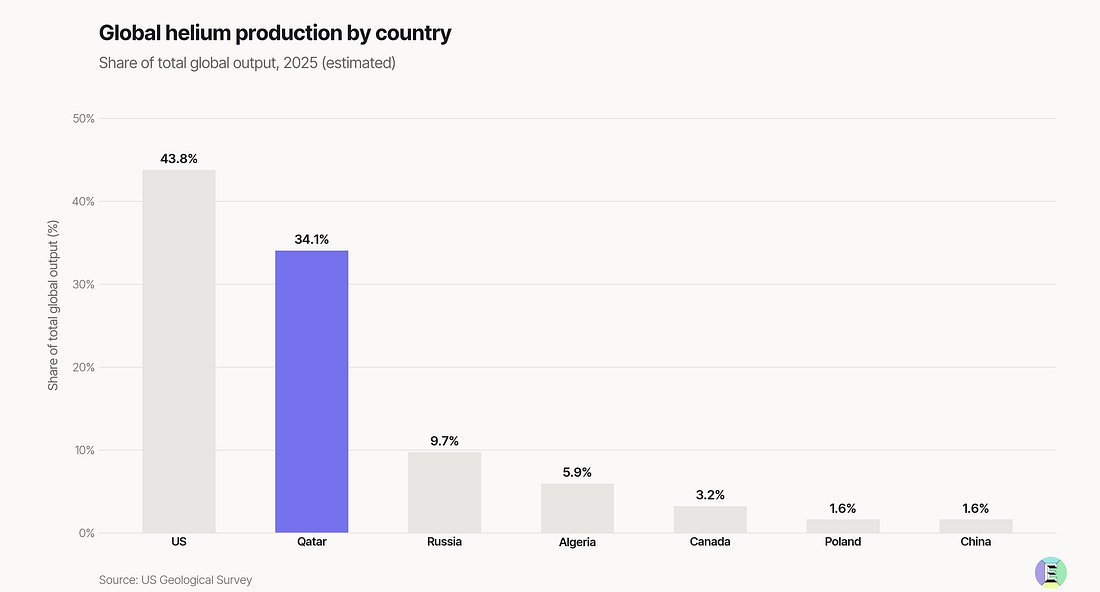
One-sixth destroyed. Last week, Iran struck the the world’s largest concentrated source of helium, the Ras Laffan facility near Doha. QatarEnergy has reported “extensive” damage which will cut 14% of annual helium exports and take 3-5 years to repair.¹
The two month clock. Liquid helium ships in insulated containers that stay viable for 35 to 48 days. After that, it warms, turns to gas, and escapes Earth’s atmosphere forever.
Cryogenic tank for transporting liquid helium. Image source: GML Tanks
Memory manufacturing is exposed. South Korea sourced 64% of its helium from Qatar last year. Its fabs use helium to produce approximately 80% of the world’s High Bandwidth Memory, which is essential for leading AI chips.
But the leading edge is secure. South Korea’s SK Hynix says that “there is almost no chance that the company will be affected” due to supply diversification; and another Korean memory player, Samsung, introduced industry’s first helium reuse system before the war started.
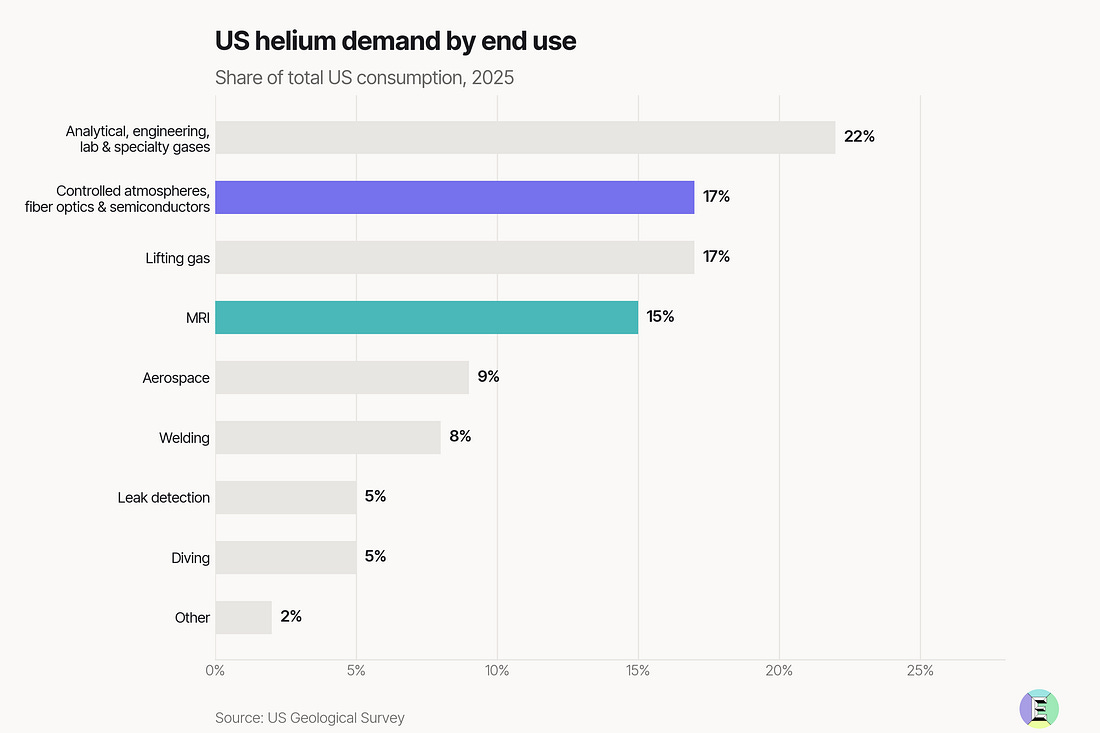
At the front of the queue. Helium suppliers tend to prioritize allocation to high-priority sectors like semiconductors and MRI. Balloons and welding, which together make up 25% of US demand, are going to be cut first.²
So what’s likely to happen? Even in a severe scenario where Qatar takes years to fully restore helium supply, the direct cost impact on semiconductors remains modest. Helium accounts for roughly 0.5-1% of fab costs; even a tripling of prices only lifts this to around 1.5-3%. For high-value chips, particularly AI accelerators, this is easily absorbed or passed through. If there is a potential constraint, it is the immediate logistics. SK Hynix procurement team may have to work longer hours over the next few weeks but we expect no significant threats to the AI economy in either the short or long term.





No comments:
Post a Comment