
Meet the startup that built the hard thing firstFirst, mortgage servicing. Next, all of regulated finance.
✨ Hey there - this is a free edition of next play’s newsletter, where we share under-the-radar opportunities to help you figure out what’s next in your journey. Join our private Slack community here and access $1000s of dollars of product discounts here. Recent top post: 2026 Tech Private Markets Analysis. All industries are disrupted, but some industries are more disrupted than others. You could even say that some industries are too disrupted. Product management. Productivity. Workplace communication. Documentation. Great new companies will probably crop up in these spaces in the future, but they aren’t where I would send the world’s most promising startup founders to go build. Then there are other industries—unsexy but enormous—that have seen comparatively little disruption. We’ve covered industries like this before: like with our spotlight on Hearth, a company solving revenue for home service contractors, or Fulcrum, software for insurance brokers.
Today, we are covering a company that deliberately chose the hardest version of this thesis. Valon started in mortgage servicing, a $25B+ market encumbered by regulatory complexity, where the casual innovator is quickly deterred by the barriers. Six years of learning the regulatory complexity firsthand has compounded into real scale. Today, Valon has:
If you have any interest in learning about (and maybe even joining) quietly dominant startups disrupting unsexy but important industries, well, this spotlight is for you. I sat down with the team at Valon to understand how they built such an impressive business and where it is headed. (As a hint: Valon’s mission is to build the AI-native operating system for all of institutional finance, not just mortgages.) I also asked the questions that you may be especially interested in: What is it like to work at Valon? And who, specifically, should consider applying?
The most common loan in AmericaYou probably don’t need much convincing that mortgages are a big deal. Most Americans own a home, and most homeowners have a mortgage; more than $13T of consumer debt is underpinned by mortgages. And the way that mortgages are distributed and run can have major impacts on both regular people and the broader economy as a whole (see: 2008). So, in some sense, you may know a lot about mortgages. But there are a couple of things you may not know that you will need to understand if you want to get a grasp on Valon’s business. The first thing is that lenders are often not the ones who manage or ‘service’ a mortgage. Lenders often hand off the work of actually running a mortgage (payments, compliance, communication, etc.) to a kind of company called a “mortgage servicer.” Valon built their own (creatively named “Valon Mortgage”). The second thing is that servicing mortgages has become significantly more complicated in recent years. The aftermath of 2008 brought a wave of regulatory crackdowns, which is part of why the cost of servicing a mortgage since then has tripled; we’re talking about a $25B market. How did those loans get serviced before Valon? “With technology that was invented before the internet was created,” co-founder and COO Linda Du said in an interview. The clunky servicing software and high servicing costs were, naturally, problems being passed straight onto everyday Americans. This reality, and the mission to fix it, deeply resonates with the people I talked to on the Valon team. “Mortgage servicing is what banking was before banks had mobile apps or mobile check deposits,”. “We’re rebuilding the entire core infrastructure in a way that is aligned with where the world is going: AI-native, automated, and with safety nets.” If you were living in the pre-Valon world and wanted to build a startup, the facts would start to add up:
What’s not to like? From friends-and-family loans to $110B in mortgagesBack in 2019, co-founders Andrew Wang, Jon Hsu, and Linda Du saw a lot to like in the mortgage market. The origin story is classic startup lore: Andrew, who had been working on mortgage problems from the other side of the table at Soros, kept running into how messy and inelegant the whole system was. He wanted a better solution to exist, badly enough that he sketched out the idea on the back of a napkin with Brian McGrath, who was an early investor with Jefferies. And they started with the same question many startup founders find themselves asking: Why can’t we just build a better piece of software to solve this? What they discovered next was both humbling and, in retrospect, clarifying. A couple of impressive résumés and fancy degrees don’t conjure a perfect piece of software into existence — and the existing mortgage servicing companies, slow-moving by nature, weren’t exactly lining up to pilot something new. But there was a more interesting revelation buried in the difficulty: nobody else had tried to solve this problem not because it was a bad idea, but because it was so extraordinarily hard. The opportunity was sitting right there in plain sight, and the whole industry had collectively shrugged and walked away. That complexity wasn’t a warning sign — it was the moat. So, instead of wasting time building unproven software nobody would want to adopt, Valon’s founding team asked a different question: What if we just build a mortgage servicing company instead? Most startups pursue a wedge strategy, starting small and expanding outward. Valon intentionally did the reverse. Things started scrappy. In order to get a license to operate as a mortgage servicer, Andrew said in an interview, you’re required to have a track record with credit agencies. This was something of a paradox, so the team “found which states had exemptions for small loans, then went out and gave loans to a bunch of friends in order to be able to report 100 loans.” All of this just to get licensed. The business snowballed, adding billions of dollars in loans. And as they grew, Valon built out the software they had envisioned from the start; effective internal software for servicing loans as well as great consumer-facing software for managing those mortgages. The team calls this the “anti-wedge” approach and it’s the only way to deploy AI into regulated industries. Owning the operating system means every workflow and data trail is structured, inspectable, and programmable, making it the perfect surface for AI. Fortune, or perhaps just a lot of hard work, has favored Valon. Valon’s mortgage operating company is now one of the top 10 mortgage servicers in the United States and has serviced over $110B in mortgages via its platform. In some ways, things have come full-circle. Now that Valon has built a proven servicing software solution, they are also able to work on realizing the idea they started with: licensing their software to other companies. The broader vision is even bigger: “Valon is building the AI-native operating system for regulated finance—starting with mortgage servicing.” While the business is currently focused on mortgage-related products and has not publicly launched anything in other areas of regulated finance, this is worth noting; Valon’s ceiling is not the size of the mortgage market. It is much higher than that. If you were searching for somewhere to work, all of this information is (probably) music to your ears. There is still a pending item, though: What is it actually like to work at Valon? What it’s actually like to work at ValonAsk most people at a startup what the culture is like, and they will give you aspirational truisms (we work hard, we move fast). These are not helpful if you want to know what it is actually like to work somewhere. So what is it like at Valon?
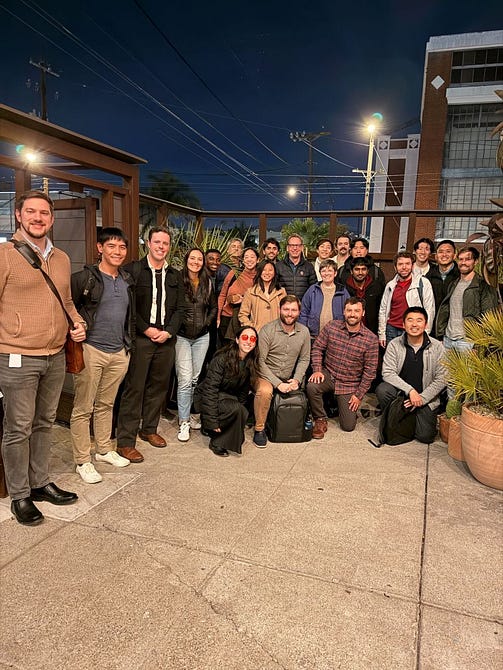
Valon has offices in New York and San Francisco (though there is flexibility for some remote roles). As for the vibe? Understanding the culture is easiest by learning how people actually work. “Even as an intern I worked on meaningful projects with real ownership. The internship project I led generated roughly $1M ARR, and I was treated like any other engineer,” one employee said.“Leadership, engineers, product, biz ops, and analytics are all visible and approachable. Oh, and people bring treats from their travels.” One product manager brings loaves of bread on Friday because the team has to ‘get this bread.’ If you worked at Valon, you would find the kind of fun, intense energy that you may have had “back in college working with friends on a really hard problem late at night, bouncing ideas off of each other, furiously marking up a whiteboard.” One example: not long ago, some folks on the recruiting team built custom Monte Carlo simulations for pipeline forecasting and a Chrome extension for resume screening. Not because anyone told them to, but because they saw a problem and solved it. “Your coworkers are deeply bought in. There’s no coasting, no political nonsense. People take real ownership and hold a high bar for themselves and each other.” Every Tuesday, you could expect laptops-down “family-style dinners.” “The week of Thanksgiving, we did a mini Valon Thanksgiving dinner that was a ton of fun.” Every Tuesday, you could expect laptops-down “family-style dinners.” “The week of Thanksgiving, we did a mini Valon Thanksgiving dinner that was a ton of fun.” But the culture of access extends beyond the dinner table. Andrew holds regular office hours — with a particular focus on AI adoption — opening his calendar to anyone in the company who wants in. It’s a small thing that signals something bigger: even as Valon has scaled, it operates with the accessibility of a much smaller startup. Anyone can get time with the CEO. And when the CEO is literally in the weeds with his team on AI, the whole company moves faster because of it. This was refreshing to hear from the Valon team—it’s not too often a startup grows like Valon has and is able to retain this kind of atmosphere. “If you think you’re moving fast, know that you can always find ways to move faster.” “Fast > perfect.” Like at most (good) startups, at Valon you are expected to perform at a high level and to put your all into the work. This isn’t some sort of 996 model where everyone’s in the office on Saturdays, but you will be asked to meet high standards. Valon is also not the kind of startup where teams work on pre-established playbooks; where anything you might do is defined six months in advance. Not long ago, some folks on their recruiting team built custom Monte Carlo simulations for pipeline forecasting and a Chrome extension for resume screening. Not because anyone told them to, but because they saw a problem and solved it. If you work at Valon, you can expect to be proactive and build things because they are useful and generate value—regardless of whether someone told you to do it. “We aggressively kill meetings that are not useful.” Meetings at Valon are usually designed either for alignment or debate. If a meeting accomplishes neither, it gets cut. One other theme I heard repeatedly: Valon feels like an asymmetric bet. The downside is genuinely capped (profitable, real product market fit, and a very strong balance sheet), but the upside is massive. Valon has resisted the hype cycle of chasing the latest AI fad and the inflated valuations that come with it. Employees joining now can still capture meaningful upside at multiples that are impossible at companies where growth is already priced in.. Two of the co-founders (Andrew and Linda) come from investing backgrounds, which is partly why.They got to see what happens when founders and CEOs are chasing the latest hype cycle instead of thinking long-term. “Andrew and Linda are both very focused on creating long-term value. From my experience, they are better execs than most of the public CEOs I met when trading stocks at Millennium (a top tier hedge fund).” “I was coming from a company with an unproven business model (and frankly no PMF). It was so refreshing to talk to a founder and company with a clear identification of the 3, 5, and 10 year strategies and numerous back-up plans to make money and win the market. “It was nice to know I had to focus less on the strategic direction of the company and could pour my focus into the pieces I was personally responsible for.”
Should you consider joining Valon?Valon is currently hiring for dozens of roles here. (There are two branches of the company—Valon Mortgage and Valon Tech—but if you are reading this you should probably look at Valon Tech.) I’d start by asking yourself whether you’re the type of person who gets excited by untangling complexity that scares everyone else off. “The competition is outdated, slow, and stuck on airport-terminal GUIs and we’re building something dramatically better in a massive, unsexy-but-enormous market,” one person said. Valon told me that people who do well at the company tend to share three qualities:
So, should you consider joining Valon? It may be easiest to answer that question by defining who shouldn’t apply. Don’t apply if you’re joining for a quick payout or a flashy headline; the payoff here will be massive, but the tradeoff is that it won’t be quick. Don’t apply if you need prebuilt systems and clear playbooks. No one here is a cog executing the machine. The job is to find the most valuable thing to do, and then go do it.. Don’t apply if your solutions tend to break under pressure; at Valon, systems have to handle zero downtime, strict compliance and edge cases that would collapse most software. From a numbers standpoint, Valon is in a sweet spot: growth is inflecting but the company is also mature enough that you have a good chance at liquidity with the equity you get, but not so late that your equity may underperform the market. “The downside is genuinely capped: we’re profitable, we have real product-market fit, a strong balance sheet, and customer demand that’s already contracted or imminently landing. This isn’t a science project or a hope-and-pray startup. But the upside is massive,” Ariel Brito said. “Valon offers an exceptional opportunity to grow quickly in your career,he company is at a pivotal stage, preparing to scale rapidly across many customers. If you want true hands-on experience in scaling a business, this is the ideal place to learn.” If you do apply, what should you expect? “The interview process was rigorous but fair,” a software engineer told me. “I did technical interviews focused on practical coding and system design, and I also had conversations with leadership about the company missions and goals. I really appreciated that people took time to answer my questions and make sure it was the right fit on both sides.” You can find Valon Tech jobs here. Don’t be scared of reaching out directly if you see somewhere you think you can add a lot of value. If you do, consider reading our guide to getting a job with cold email before you do so to increase the odds your email is a good one. Thank you to Valon for supporting Next Play and making this spotlight possible. You're currently a free subscriber to next play. For the full experience, upgrade your subscription.
|
Meet the startup that built the hard thing first
Friday, 27 February 2026







Subscribe to:
Post Comments (Atom)


No comments:
Post a Comment