
Hey, Luca here, welcome to a weekly edition of the💡 Monday Ideas 💡 from Refactoring! To access all our articles, library, and community, subscribe to the full version: Resources: 🏛️ Library • 💬 Community • 🎙️ Podcast • 📣 Advertise Brought to you by Unblocked! 🔳
1) 🔨 Managers are back to codingLast week we published our big industry report on how engineering teams are using AI — which we have been working on for more than three months! An insight I am particularly fond of is that many engineering managers are back to coding because of AI, which shows both in overall numbers—coding is the #1 AI use case for managers —and in individual stories. AI is helping managers do more coding in two ways:
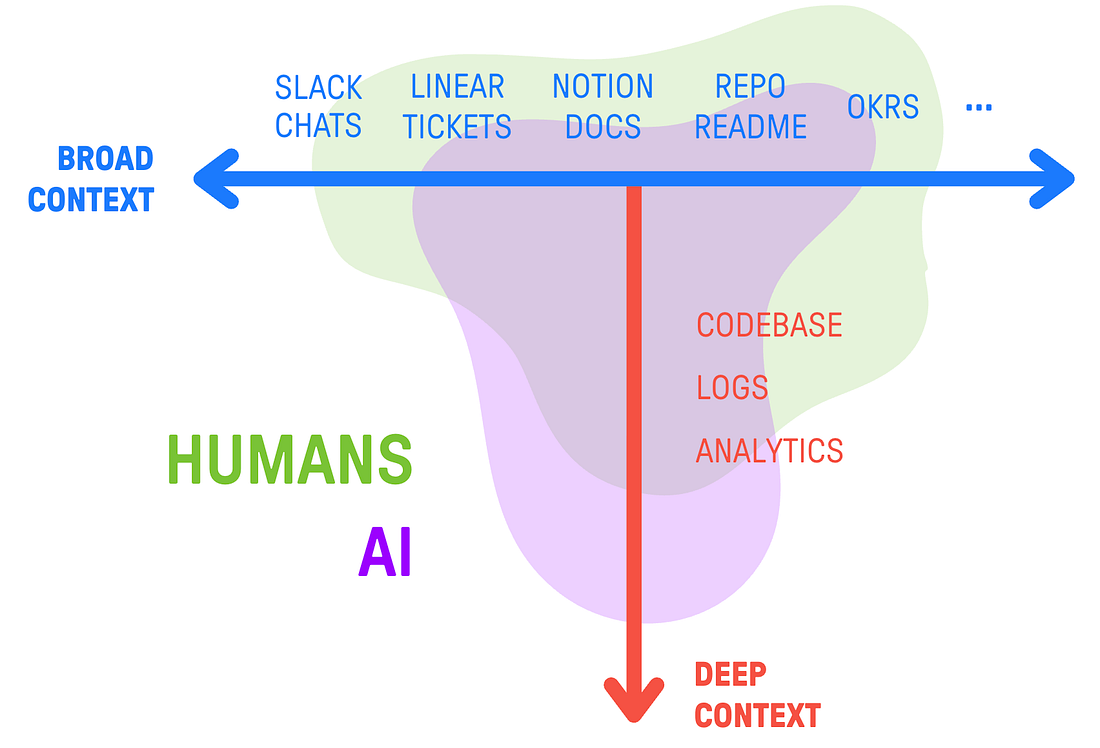
You can find the full (free!) report below!  2) 📑 Broad context vs deep contextThere is a lot of talk these days about context engineering, or how to give AI everything it needs to know to perform well. This is an area where AI is legitimately a bit different than humans, but the conclusions—we’ll see—are similar. With some degree of simplification, when it comes to parsing—or putting together—info for some task, there are two types of context we work with:
Humans are just great at broad context and at keeping all these different things in their heads. AI, instead, struggles with it, while it excels at working through individual big chunks of data, way better than we are capable of. For sure, some of the AI imitations with processing broad context may just be tooling limitations: MCPs are clunky, RAG feels like early tech, and some sources are just usually not plugged in — but it is what it is, and we have to work with it. So, today AI works best when you maximize local reasoning opportunities: make things self-contained, limit coupling, and make AI find everything in the same place. This usually spawns from good design choices, like good componentization, keeping docs in the repo, and the evergreen low coupling + high cohesion. We published a full guide on how to design your tech stack for AI in this recent newsletter edition 👇 3) 🎲 Avoid “resulting” in decision makingIn August I interviewed Annie Duke, one of the world’s top experts in decision making and former world-class professional poker player. We talked about many things, and one that stuck with me was the fallacy of resulting — that is judging decisions by their outcomes rather than the quality of the decision-making process itself. Annie uses a game analogy to illustrate this:
The error that we often make is to treat everything like chess. We ignore the fact that there is uncertainty involved and we just assume:
This happens constantly in business. The “resulting” bias creates a major impediment to learning because it prevents us from properly closing feedback loops and understanding the true reasons behind outcomes. Here is the full interview with Annie: 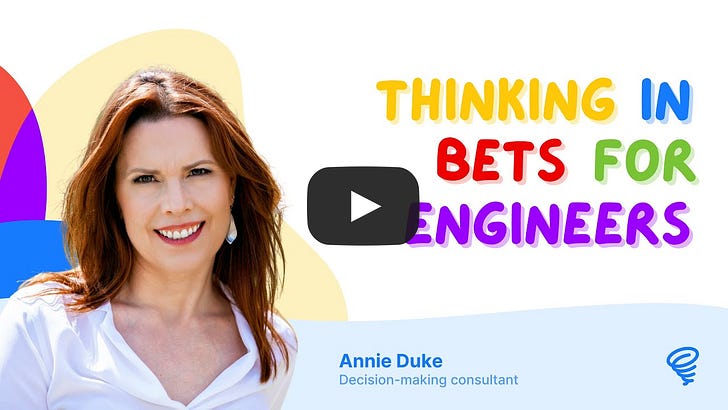 You can also find it on 🎧 Spotify and 📬 Substack And that’s it for today! If you are finding this newsletter valuable, consider doing any of these: 1) 🔒 Subscribe to the full version — if you aren’t already, consider becoming a paid subscriber. 1700+ engineers and managers have joined already! Learn more about the benefits of the paid plan here. 2) 📣 Advertise with us — we are always looking for great products that we can recommend to our readers. If you are interested in reaching an audience of tech executives, decision-makers, and engineers, you may want to advertise with us 👇 If you have any comments or feedback, just respond to this email! I wish you a great week! ☀️ Luca
|
Coding managers, types of context, and bad decisions 💡
Sunday, 12 October 2025




Subscribe to:
Post Comments (Atom)


No comments:
Post a Comment