
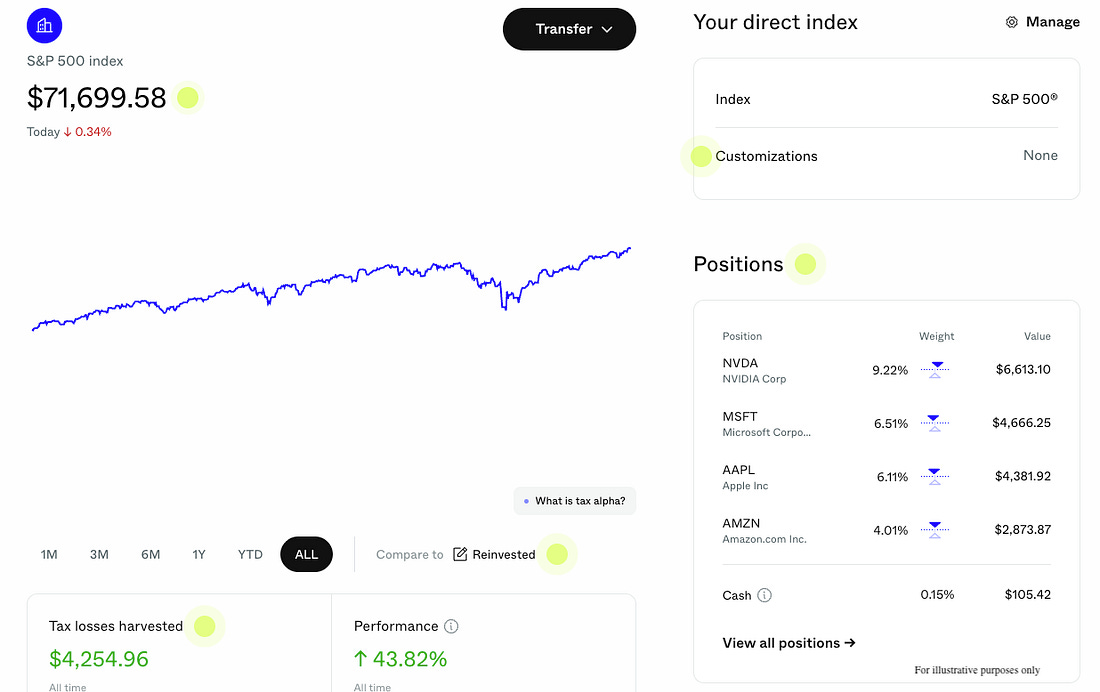
✨ Hey there this is a free edition of next play’s newsletter, where we share under-the-radar opportunities to help you figure out what’s next in your journey. For more: check out the Friends of Next Play Slack. I think one of the best applications of technology is making useful services more accessible to more people. The general premise is that you can take the sort of quality and sophistication that is typically reserved for the ultra wealthy and democratize access to it by finding ways to lower costs. Services are often expensive because they are very manual and human-intensive to deliver. If you can build robust technology that automates much of the process, you can pass on savings to your end-customer and greatly expand the target audience. This is a simple idea but hard to actually execute well. There have been countless companies that say they can deliver on this promise—of delivering “ultra high quality services for a fraction of the traditional cost”—but end up in the startup graveyard. Why is that? There’s many reasons - perhaps the biggest is that they overestimate their capacity to automate and underestimate the negative impact their changes could have to the customer experience. The result is a sort of frankenstein product: one that loses money and is not actually that great for customers. That’s not to say this sort of vision—one which I think is really great and more people should aspire to—is impossible. It just takes a unique blend of ambition, focus, and patience. One that you do not find often, but I did encounter when I met with Mo and the team from Frec. Their vision is to democratize sophisticated investment and tax strategies, like direct indexing and long short strategies, and make them available to anyone with financial ambition, all at low fees and low minimums. And they seem to be well on their way: hundreds of millions in assets under management, backing from leading investors like Greylock and others, and 50% quarter over quarter growth. More than that though - they have successfully crossed the chasm: they have built a scalable version (financially and operationally) of what was once reserved for the ultra wealthy, and brought it to a much wider market. You can see their product here. (Ah and yes they are hiring for many roles: product designers, backend engineers, and fullstack engineers - email careers@frec.com to learn more) So how did they do this? What is the vibe of the company? Where are they going next? All that and more in this Next Play Spotlight.
Major thanks to the Frec team for sharing interesting details with us and supporting the Next Play community! Quick disclaimer: The information provided herein is for general informational and educational purposes only and does not constitute financial, investment, legal, or tax advice. No content should be interpreted as a recommendation to buy, sell, or hold any investment or security, nor as an endorsement of any financial strategy. You should consult with a qualified, licensed financial advisor or other professional who understands your individual circumstances before making any investment decisions. Past performance is not indicative of future results, and all investments carry risks, including the potential loss of principal. What’s the right way to start a company with this sort of mission? Well there’s not a single correct way—but Frec’s approach seems pretty effective. They started by defining a clear vision, and then everything they’ve done since then has come as a result of asking the straightforward question: “What could we do to enable that vision?” This sort of working backwards approach, while it sounds a bit obvious, is quite different from how many people approach startups - where they come up with an idea and just throw it at the wall and see if it goes viral. That may work for some types of products—perhaps something like a social network—but when dealing with highly regulated and complicated spaces like financial services, that sort of iteration loop ends up being quite slow and does not clearly lead to a great, unified product. To the extent possible, leading with a clear vision upfront can be far more efficient. It gives you a north star that helps you and your team prioritize your resource allocation. Frec’s vision is very clear to everyone we talked with one the team:
There’s a lot more specificity to Frec’s particular vision (specifically about bringing useful tooling like direct indexing to more people) but you get the idea. Make your vision as clear as possible - this is useful for your own thinking, for people you bring onto the team, for investors, and for your customers.
And once you have articulated the idea, what really matters is execution. How well can you achieve your stated mission? (And how quickly can you do it?)
Execution of course comes down to many factors. Much like an investor, a job-seeker needs to figure out how well this machine (i.e. a startup they are considering joining) is executing. There’s no specific formula we know of—but we asked people at Frec some questions around how they personally underwrote the team’s effectiveness when they themselves were thinking of joining, and how their experience has lived up to their initial expectations. Here are some of their answers. Is the team close with the customers?
Do you find the people at the company to be smart and talented?
Are the vibes good and positive?
Do you trust the CEO?
How do you feel about leadership?
A common mistake early stage startups make is hiring too quickly. We all know this—and yet it happens very often. You hire quickly and dilute the culture while increasing your burn and end up in a tricky situation. The Frec team has taken a different approach. One that I think many companies could learn from. Keep the team small and prioritize what matters - and what really moves the needle for getting you closer to your vision.
Avoid getting caught up in distractions. A common one is bureaucracy. Yes, you’d be surprised (or perhaps not) but so many small teams, even just a few people, can get stuck wasting time. Wasting time playing politics and wasting time in meetings.
For this sort of small team approach to work well, you need to find values-aligned people. People who you can trust to execute on their priorities. People you can actually delegate responsibility to, and reliably expect them to deliver. That’s Frec’s expectation for every new hire they bring on the team—they want people who can take in lots of complicated context and still be effective:
They of course care about collaboration:
But they want people who can run alongside the team—and help accelerate the vision.
While they work in a complicated industry with lots of compliance and regulatory considerations—they do not expect everyone to be an expert. They just want people who are curious and committed.
If you are curious about Frec—either as a customer or a candidate—you can learn more about them here and email careers@frec.com. They are hiring out of their SF office and open to candidates in NYC (office coming soon). They are looking for engineers and designers especially:
Frec offers competitive salary and equity grants, fully paid health and dental, 401k, a monthly wellness stipend, flexible time off, and catered lunch everyday in office. And if you are looking for more roles, be sure to check out Next Play. Next Play is not a client of Frec and Frec sponsored this post. Investing involves risk, including risk of loss. You're currently a free subscriber to next play. For the full experience, upgrade your subscription.
|
Revenue growing 50% every quarter
Sunday, 17 August 2025





Subscribe to:
Post Comments (Atom)


No comments:
Post a Comment